Carbon nanotubes in far-side soil
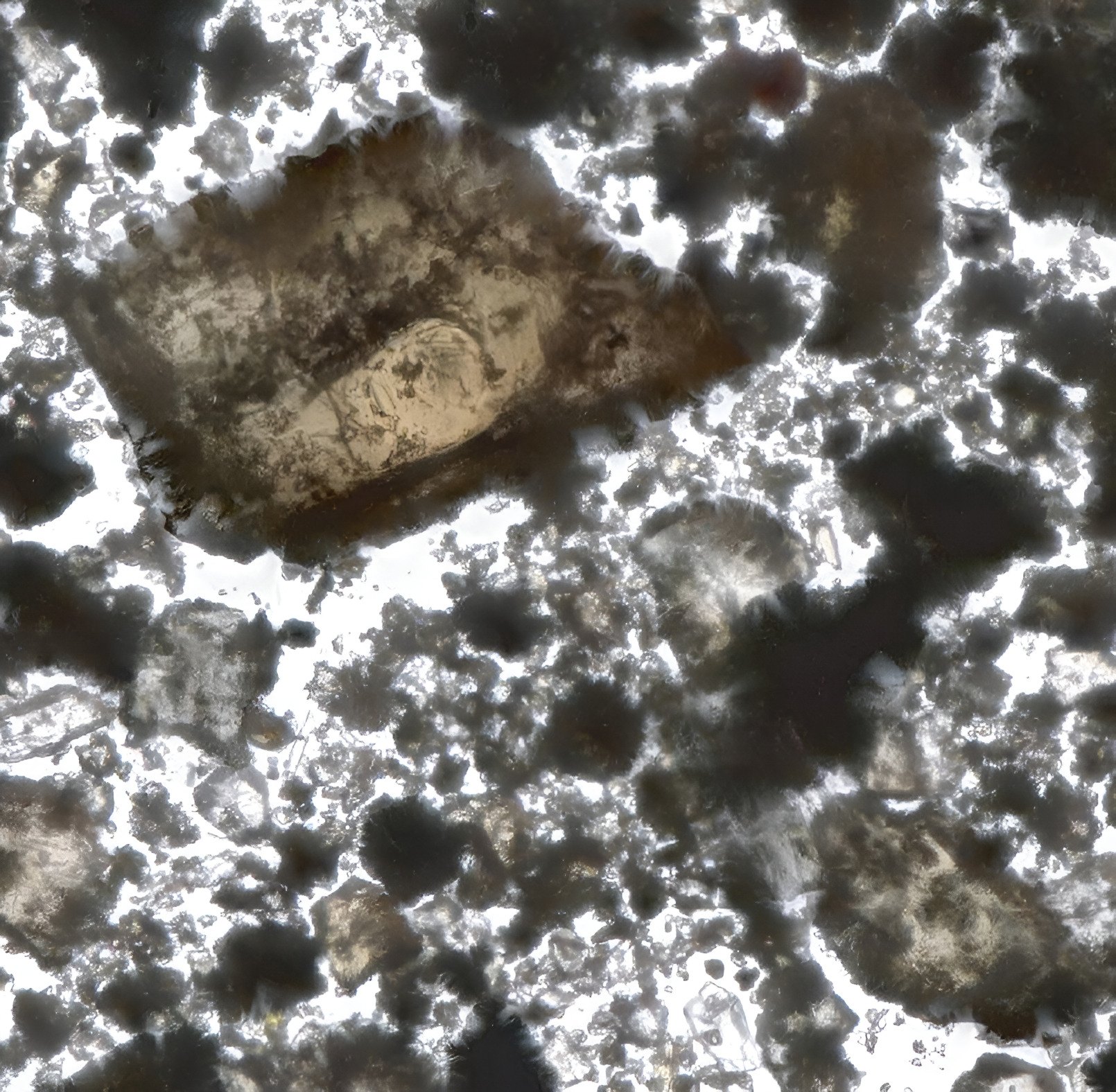
Single-walled carbon nanotubes found in Chang'e-6 soil, the first ever found in nature.
What was found
In soil that China's Chang'e-6 lander scooped from the Apollo basin on the Moon's far side in June 2024, a Jilin University team found two things nobody had seen on the Moon: graphitic carbon, and single-walled carbon nanotubes. These are sheets of carbon one atom thick, rolled into seamless tubes about a nanometre across, a hundred thousand times thinner than a hair. The team checked the same spots with several kinds of microscope and spectrometer, and the tubes sat in tiny soil fragments clustered around micrometeorite impact scars. Far-side carbon showed more defects than the near-side carbon from Chang'e-5. On the record: peer-reviewed, Nano Letters, 2026.
Why this is extraordinary
Single-walled nanotubes are one of the hardest things human industry makes. They were first made in 1993, at NEC and IBM, two years after the multi-walled kind. Every route since needs the same narrow recipe:
- A carbon gas to grow from, such as methane, carbon monoxide or vaporised graphite.
- Metal catalyst particles of exactly the right size, iron, cobalt or nickel about one to two nanometres wide. The particle sets the tube's width; too big and you get multi-walled tubes or soot.
- Steady high heat, roughly 600 to 1,200 °C in a furnace (or an electric arc or laser), held long enough for the tube to grow.
- A sealed, oxygen-free chamber. Without control, you get soot, not tubes.
Nature has never been shown to follow that recipe. Multi-walled nanotubes, the cruder kind, have turned up on Earth in a 10,000-year-old Greenland ice core, in combustion soot and in an oil-well deposit. Single-walled ones had never been found anywhere in nature, on Earth, in meteorites or in space. The authors say so themselves: these materials were "assumed to require artificial preparation."
The lunar surface looks like the worst place to try. It has no air, so there is no gas for a tube to grow from. Its soil holds only about a hundred parts per million of carbon, most of it single atoms implanted by the solar wind. And the heat it gets from an impact lasts a fraction of a second, not the minutes a furnace runs.
The explanation on offer
The team proposes that micrometeorite strikes flash-vaporised carbon from the solar wind and from meteorites, that the vapour cooled within moments, and that tiny iron grains in the soil caught the carbon and threaded it into tubes. They add early volcanism and solar-wind irradiation as helpers. Lunar soil does contain plenty of nano-sized iron made by space weathering, which is what makes the idea plausible.
But it is a proposal. Nothing published shows anyone reproducing it: no lab has fired a micrometeorite into simulated lunar soil and made a single-walled tube. The abstract states the tubes "were formed through" this process as a finding, without an experiment behind it. Natural cause proposed, not demonstrated.
The "what if"
Physicist Max Derakhshani made this point on Ross Coulthart's Reality Check days after the announcement. The team "simply asserts without evidence that they formed naturally… but they never actually attempt to establish it with actual experimental tests." He sets out two possibilities. Either the tubes got into the sample on Earth, which would make it no discovery at all. Or they really were in the far-side soil, and then "the hypothesis that this is a technosignature of some kind by an ET civilization has to be taken seriously."
The second reading has a logic to it. A single-walled nanotube is exactly what a technical civilisation makes: we prize them for super-strong composites, electronics and space-elevator tethers. A material that, until this paper, only a factory had ever produced has turned up in the soil of the hemisphere Earth never sees. That is also where Carl Sagan's 1963 NASA-funded paper suggested a visitors' base would be best placed. Battered, defect-rich tubes in impact-worn grains are what manufactured material left lying for a very long time would look like. Speculation, but not ruled out by anything on the record.
What would settle it
- A lab reproducing single-walled tubes by impact on iron-bearing simulated lunar soil.
- Carbon isotope ratios in the tubes. Solar-wind carbon has its own signature, distinct from Earth's, so this separates lunar origin from Earth contamination.
- The same tubes in other far-side or near-side samples (Apollo, Chang'e-5), or their absence.
Evidence, in date order (1)
- 2026Jilin University (Nano Letters)physicalSingle-walled carbon nanotubes identified in Chang'e-6 far-side soil Discovery of Naturally Occurring Single-Walled Carbon Nanotubes and Graphitic Carbon on the Far Side of the Moon (Nano Letters, 2026)
How plausible · High
A peer-reviewed study of returned Chang'e-6 soil found the nanotubes; the natural route has not been reproduced.
- ●●Access Returned samples.
- ●●No gain sought Science.
- ●●Restraint Authors propose natural cause.
- ●●Character record Peer-reviewed.
- ●●Checkable details check out Published.
- ●●Physical traces or official reaction Physical samples.
Plausibility weighs how well an account fits where secrecy hides the documents by design, so missing records never count against it. Strength measures what is documented. Assessed 2026-10-23.