Merivälja: "Object M", the metal under a Tallinn garden that Soviet diggers never reached (Estonia, 1969)
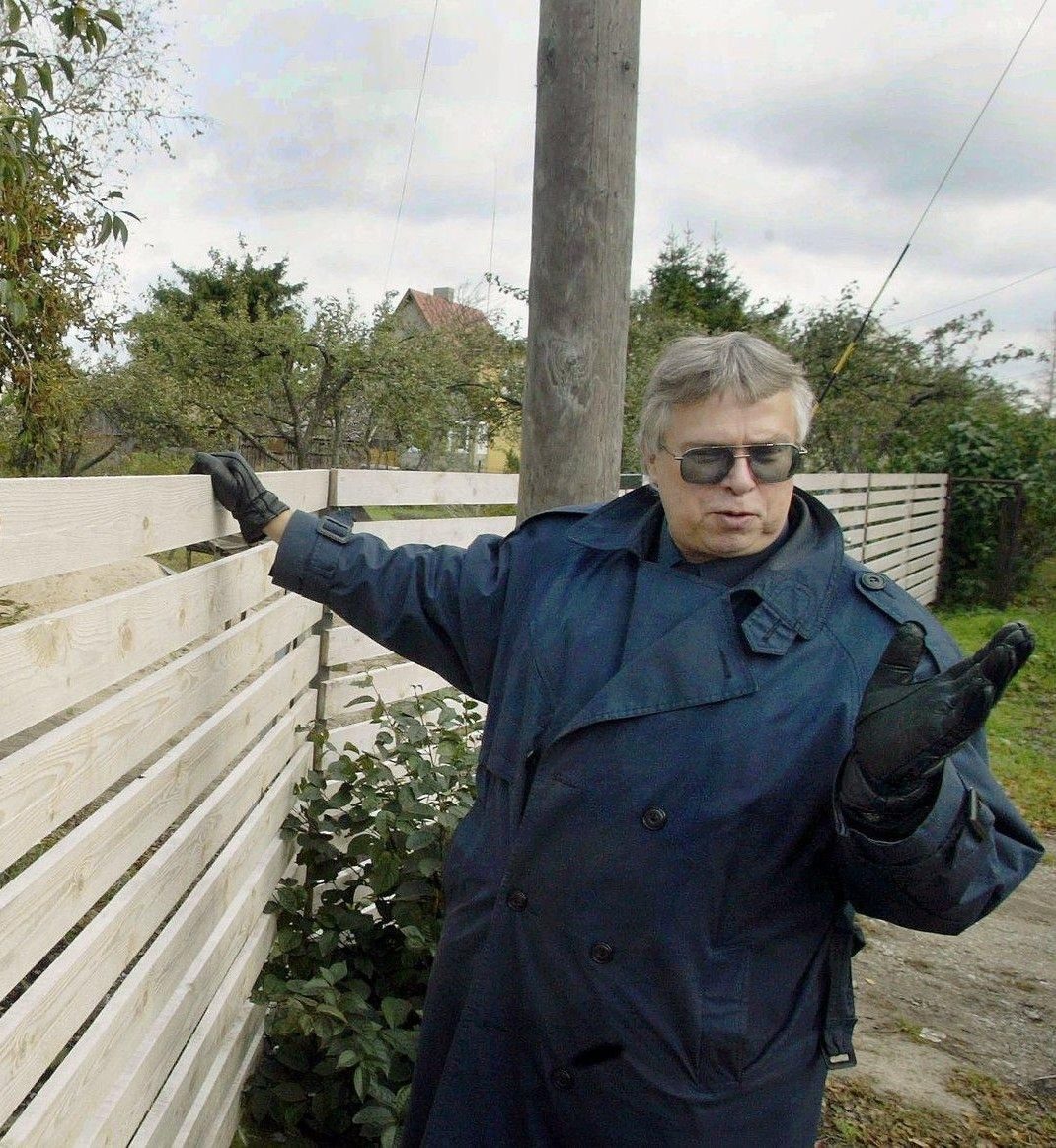
In 1969 a well dig in a Tallinn suburb struck metal seven or eight metres down. Fragments reached Soviet laboratories, an Estonian Academy of Sciences report reportedly found about 40 elements and called the alloy impossible to make on Earth, and Soviet researchers and officials spent years sinking a shaft about 10 m into the garden without ever reaching the object. A test of a sample in 2017 found nothing unusual, but nobody can show the sample was original, and the garden has never been surveyed.
The house belonged to Virgo and Vivika Mitt. Most of what is known comes through two people: Igor Volke (1950 to 2024), Estonia's best-known ufologist, who gathered the documents, and Mart Sander, a musician and author who was Vivika Mitt's pupil at Tallinn Secondary College and later heard the details from her over tea. Sander calls it "Object M" in his new book, Object M: Estonia's Buried Mystery. Ross Coulthart took a NewsNation crew there with Beatriz Villarroel and Dennis Åsberg for a Reality Check special in August 2026.
Metal at seven metres
Virgo Mitt was using a compressed-air drill when he hit a solid metal object about seven or eight metres down, and fragments came off. They lay around for years, Sander says, until in the late 1970s or early 1980s they reached the local Institute of Geology, where they were treated with polite curiosity until a lab assistant handed one "received an electric shock in front of everyone" and reportedly blacked out for a couple of seconds. The Estonian Academy of Sciences, in a report Coulthart shows on screen, found about 40 elements, iron and titanium among them, and concluded, in his words, that it was "physically impossible for that kind of metal to have been manufactured on the planet". A 1987 interim report attributed to the Academy's Geological Institute was reproduced in Marina Popovich's 1991 book UFO Glasnost. According to Volke, the samples were split three ways, to Kyiv, Moscow and a Soviet defence laboratory; Sander says most fragments left Estonia.
A shaft that stopped short
Soviet military men and researchers dug in the garden "for a couple of years", Sander says; NewsNation's description of its interview with Villarroel and Åsberg has the effort running on and off until perestroika. Photographs show people standing in a shaft about 10 m deep. None shows the object, a gap Coulthart says bewilders him. Sander's answer: "the object was never seen nor reached." What he describes is an upper layer the diggers never broke through, with the object reported beneath it.
So nothing concrete, no photos showing anything.
What the street remembers
Neighbours told NewsNation's crew, through a translator, that KGB and military people came from all over the Soviet Union and that many of the officers involved died quite soon after; no names or dates are given. In the house, Vivika Mitt told Sander, books flew across rooms and pillows were shredded during the digs. Sander says he watched the family dog, "a nervous wreck", lunge and bark at nothing while they sat at tea. He also reports the later charge that she kept feeding the legend to monetize it. Volke went further than anyone: two objects, a 17 by 22 m disc and a 2 by 4 m "grenade", and talk of a headset for a psychic link to the craft. Sander says there is no hard evidence of either, only drawings made mostly by psychics.
The retests and the missing samples
Tests in 2012 to 2017 gave completely different, ordinary results. Sander says even the team leaders could not be sure they had the original pieces. Villarroel says the 2017 Tallinn scientists were not sure their sample came from the object, published no report, gave only statements to the media and did not answer her request for the data: "I wouldn't make any conclusions at all." Asked for its records and the sample, TalTech told NewsNation: "we do not have any archival materials that might interest you."
The present owner told Villarroel he does not believe in it and does not want to be involved. She hopes to return with ground-penetrating radar, which would settle what lies under the garden without digging.
Proposed explanation: the 2017 analysis called its sample human-made, and Sander's full interview takes up a meteorite and a First World War superalloy buried in a hurry. Each is proposed, not demonstrated, while nobody can trace the original fragments.
Evidence, in date order
- 1987Geological Institute, Estonian Academy of Sciencesofficial1987 interim report on the fragments, reproduced in Marina Popovich's UFO Glasnost (1991)
- 2017Director. Inseneeria (Tallinn)press2017 article on the Tallinn University of Technology analysis of a sample
- Excavation photographsphotoshow the shaft dug down through the garden, about 10 m deep, with people standing in it
How plausible · Low
That Soviet scientists and officials dug for years under a Tallinn garden is well attested; that they were digging for a craft rests on reported lab results nobody can now examine, a legend that has grown, and a homeowner who will not allow a radar survey.
- ●●Checkable details check out The house, the 1987 report in UFO Glasnost, the 2017 article and a ground-penetrating radar survey could all settle parts of it.
- ●○Access Sander knew the homeowner and her garden in the years of the digging; Volke held documents.
- ●○Consistent over time Neighbours, Sander and the published 1987 report agree on the strike, the digs and the official interest.
- ●○Restraint Sander says repeatedly that he cannot vouch for the reported layers and that there is "nothing concrete, no photos" of the object.
- ●○Independent convergence Neighbours independently remember the excavations and the officials; that corroborates the digging, not the object.
- ●○Fits secrecy practice Soviet secrecy, and files Sander says went to Russia, explain the missing lab records.
- −Story grew The story has gathered a second object, a psychic headset and a run of deaths.
- −Commercial motive Sander has a book and a film; he reports claims that the homeowner monetized the legend.
Plausibility weighs how well an account fits where secrecy hides the documents by design, so missing records never count against it. Strength measures what is documented. Assessed 2026-11-21.
Claims
Similar cases
Connected cases
- Soviet UFOs 1967The wider Soviet programme
People and organizations
- Beatriz Villarroel personInvestigating (European Crash Retrieval Initiative)
- Marina Popovich personReproduced the 1987 report in UFO Glasnost (1991)
Sources
- Reality Check: Secret Soviet UFOs, 'KGB swarms suburban house in UFO hunt' (NewsNation, YouTube, 19 Aug 2026)
- Reality Check, 'Object M: The buried Estonian mystery the KGB spent years trying to reach' (podcast, 11 Aug 2026), full interview with Mart Sander
- Reality Check, 'Secret Soviet UFOs: What happened when two scientists knocked on a door in Estonia?' (podcast, 20 Aug 2026), full interview with Beatriz Villarroel and Dennis Åsberg
- Mari Kamps, 'Kas Merivälja mõistatus lahendatud? TTÜ teadlased eemaldasid saladusteloori' (Is the Merivälja mystery solved? University of Technology scientists lift the veil), Director. Inseneeria, 2017, pp. 106 to 110 (library record)
- Wikipedia: Igor Volke
 The Soviet side of the story1967
 David Grusch comes forward2023
 Saucers over the Capitol1952
 Apollo 14 blue orbs1971
 Beatriz Villarroel, VASCO and the…2019