2005 · Mausoleum of Qin Shi Huang, Lintong, Xi'an, China
Rivers of mercury in the First Emperor's tomb
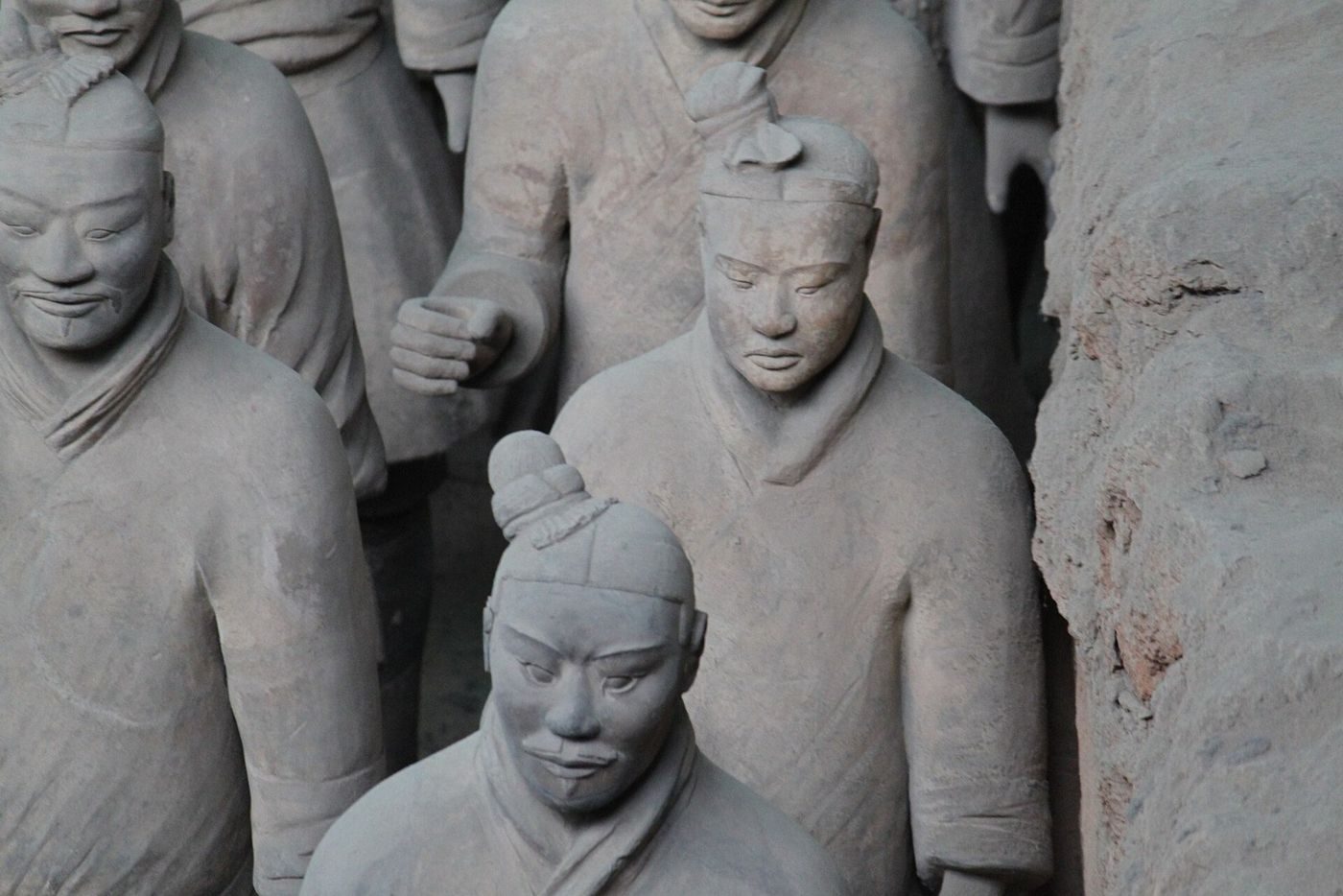
Terracotta soldiers in Pit 1, part of the First Emperor's burial complex near Xi'an. The unexcavated tomb mound lies about 1.5 km to the west (2011). · Gary Lee Todd / Wikimedia Commons
When1980s–2021
WhereMausoleum of Qin Shi Huang, Lintong, Xi'an, China
The historian Sima Qian wrote that the First Emperor's tomb held a model of his empire with rivers of mercury. Soil and air surveys over the unexcavated mound near Xi'an found a strong mercury anomaly, and remote sensing mapped a large underground palace. China has chosen not to open it.
How plausible · Very high
Repeated, published mercury measurements match a 2,100-year-old written account; the tomb is unopened by policy.
- ●●Access Survey teams on site.
- ●●No gain sought Science.
- ●●Restraint No claim beyond the measurements.
- ●●Character record Published teams.
- ●●Independent convergence Sima Qian's account and modern surveys agree independently.
- ●●Checkable details check out Published papers.
Plausibility weighs how well an account fits where secrecy hides the documents by design, so missing records never count against it. Strength measures what is documented. Assessed 2026-10-23.
Claims
Soil surveys show a strong mercury anomaly over the burial mound, fitting Sima Qian's account of rivers of mercury.firsthandOn the recordLiu et al. (2005); Scientific Reports (2020) on mercury in the air
Remote sensing mapped an underground palace about 80 by 50 by 15 m beneath the mound.firsthandSourced, unconfirmedChinese survey teams, incl. Beijing Normal University muon work (2021)
‹ Previous in Lost civilizationsMuons under the Pyramid of the Sun4 of 8Next in Lost civilizations ›Younger Dryas impact