2000 · Pyramid of the Sun, Teotihuacan, Mexico
Muons under the Pyramid of the Sun
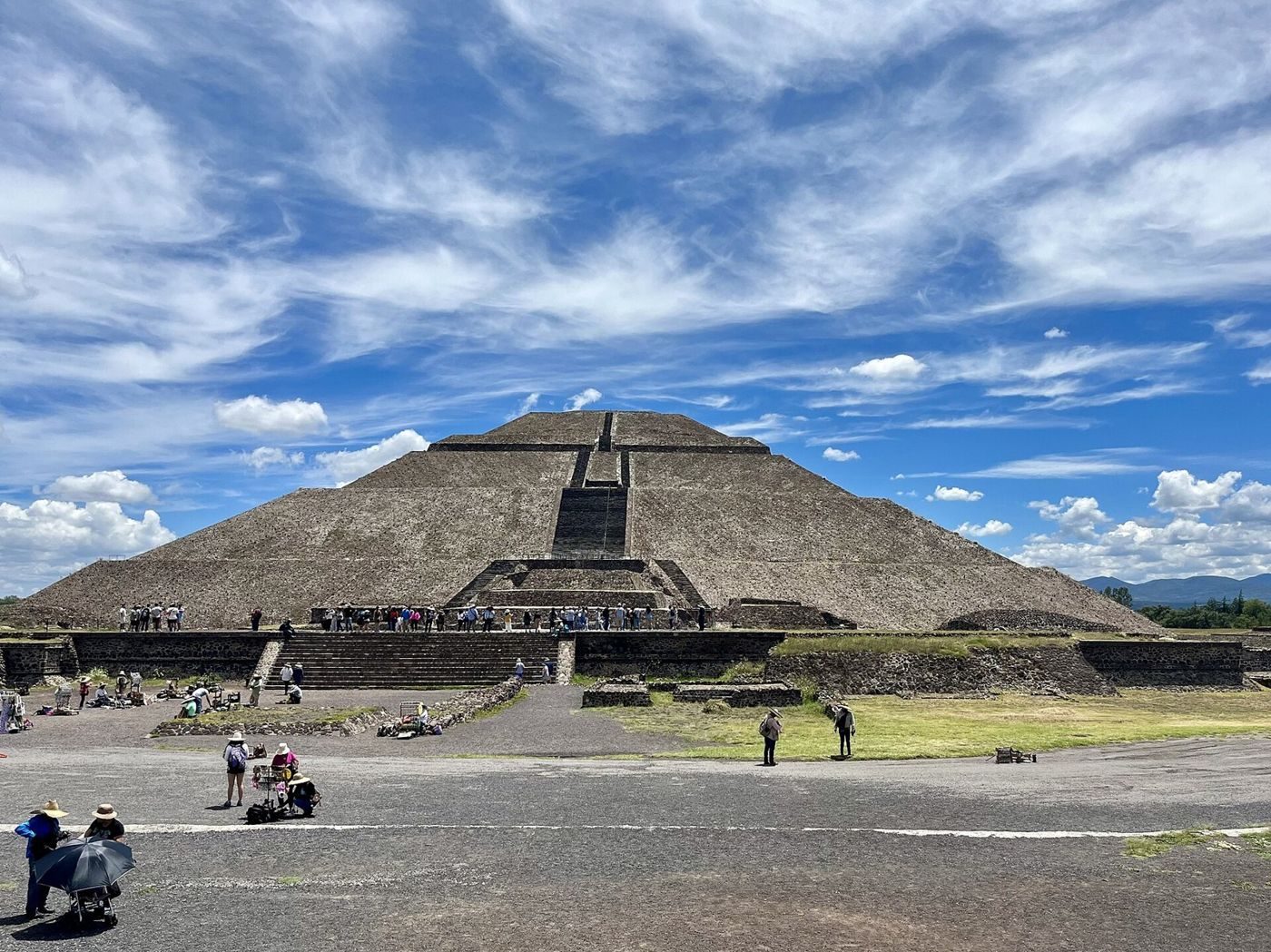
The Pyramid of the Sun at Teotihuacan, Mexico, from the front (2023). The muon detector sat in a tunnel beneath it. · Malkowo / Wikimedia Commons
When2000–2014
WherePyramid of the Sun, Teotihuacan, Mexico
A UNAM team led by Arturo Menchaca placed a cosmic-ray muon detector under Teotihuacan's Pyramid of the Sun, the method first used on Khafre's pyramid in 1969. Over more than a decade they found one side markedly less dense than the other but no hidden chamber.
How plausible · High
Published muon data from a university team shows a density asymmetry; no chamber, not yet confirmed by a second method.
- ●●Access A detector under the pyramid.
- ●●No gain sought Science.
- ●●Restraint No chamber claimed.
- ●●Character record UNAM physicists.
- ●●Checkable details check out Reported publicly.
- ●●Physical traces or official reaction Instrument data.
Against
- −Lone source, no corroboration Not confirmed by a second method.
Plausibility weighs how well an account fits where secrecy hides the documents by design, so missing records never count against it. Strength measures what is documented. Assessed 2026-10-23.
Claims
A muon detector in a tunnel under the pyramid showed one side at least 20% less dense than the other; no chamber was found, and the asymmetry raised worries about the pyramid's stability.firsthandOn the recordArturo Menchaca (UNAM), via NPR (2014)
‹ Previous in Lost civilizationsGöbekli Tepe3 of 8Next in Lost civilizations ›Rivers of mercury in the First Emperor's tomb