1917 · Saturn, seen from England
The 1917 light that crossed Saturn's rings
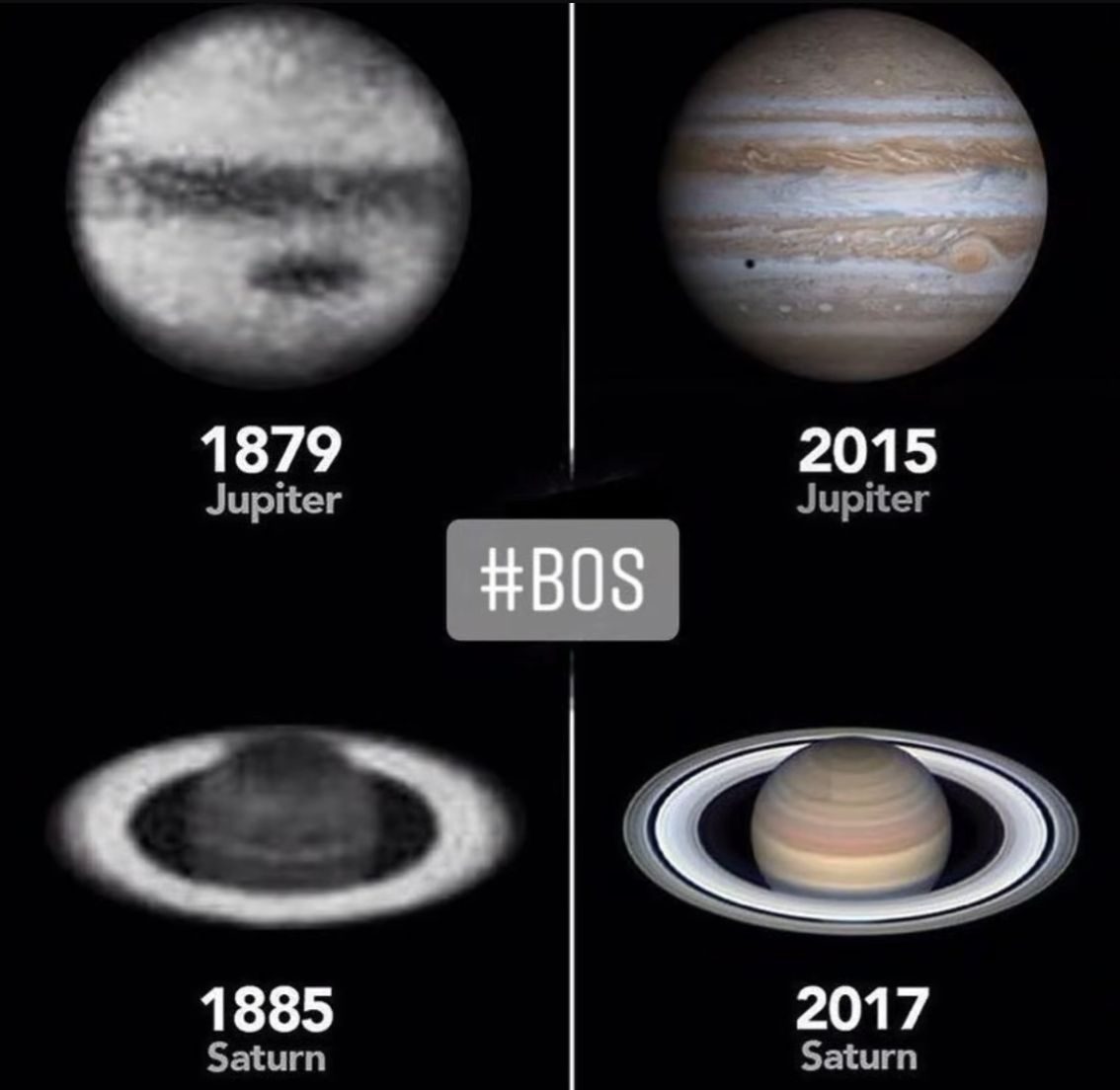
Telescope views of 1879-1885 against modern images (video grab) · Frame grab from the video
When9 February 1917
WhereSaturn, seen from England
Backing3 independent
Witnesses1 named
Evidencedocuments
On 9 February 1917 two British observers, Maurice Ainslie and John Knight, independently watched a bright point cross Saturn's rings in a straight line without ever being fully blocked. The astronomers of the day filed it as a background star passing behind the rings. Seventy years later Bergrun argued that it moved, devoured ring material, and ran along the same chord as the vehicles in his Voyager Plate 3.
Evidence, in date order (3)
- 1917BAA Journal vol. 27documentcontemporary report of the observation BAA Saturn Section history
- 1917Naturedocumentcontemporary report of the observation BAA Saturn Section history
- 9 Feb 1917John Knightwitnessindependent second observer of the crossing BAA Saturn Section history
How plausible · High
Two named astronomers independently saw a bright source cross Saturn's rings, reported at the time; star or moving source is disputed.
- ●●Access Telescopes.
- ●●No gain sought Amateur astronomers.
- ●●Restraint Called it a star.
- ●●Character record BAA astronomers.
- ●●Independent convergence Two independent observers.
- ●●Checkable details check out Published reports.
Plausibility weighs how well an account fits where secrecy hides the documents by design, so missing records never count against it. Strength measures what is documented. Assessed 2026-10-23.
On the record
- Both readings agree that a bright point crossed the rings in a straight line and stayed visible; the observers are firsthand.
- Contemporary reports: BAA Journal vol. 27 (1917) and Nature; the BAA Saturn Section history files it as an occultation of BD +21 1714.
Claims
Maurice Ainslie and John Knight independently saw a source so bright that Ainslie called it a "star" cross the rings along a straight chord of about 125,000 km in 1 h 40 min (about 21 km/s); it looked elongated, "appeared to devour material ahead", and the rings never fully blocked it.Bergrun's ring vehicles in the Voyager platesanalysisSourced, unconfirmedNorman Bergrun
It crossed on the same chord as the vehicles in his Plate 3.Bergrun's ring vehicles in the Voyager platesanalysisSourced, unconfirmedNorman Bergrun
The event was an occultation of the catalogued 7th-magnitude star BD +21 1714 by Ring A and the Cassini Division; the star stayed visible, dimmed, through Ring A, which showed Ring A is translucent.firsthandSourced, unconfirmedBAA Saturn Section
In The picture
The pictureThe neighbourhood is kept. In 1917 two British astronomers independently watched a bright point cross Saturn’s rings. Norman Bergrun, a NACA and Lockheed engineer, read the Voyager photos of Saturn as enormous electromagnetic craft laying down and maintaining the rings. Cassini later found moonlets being born at the …
The RingmakersOn 9 February 1917 two British observers, Maurice Ainslie and John Knight, independently watched a bright point cross Saturn's rings in a straight line without ever being fully hidden by them. Seventy years later Norman Bergrun, who had spent his career at NACA Ames and Lockheed, found the same chord in the Voyager p…
1 of 5Next in Saturn's Ringmakers ›Bergrun's ring vehicles in the Voyager plates