Invention Secrecy Act of 1951 (35 U.S.C. 181-188)
The Invention Secrecy Act of 1951 lets the US government stop a patent from being granted, and bar the inventor from telling anyone about the invention, when publication might harm national security. At the end of fiscal 2026, 6,653 inventions sat under secrecy orders.
The orders reach private inventors too: 38 of the new orders in 2026 hit people with no government contract. Breaking one can cost the patent, a $10,000 fine and two years in prison. The list that tells screeners what to look for is secret as well, and its 1971 edition has categories for propulsion and energy conversion. Nobody outside can say whether any order touches gravity or propulsion physics, because the orders themselves are secret.
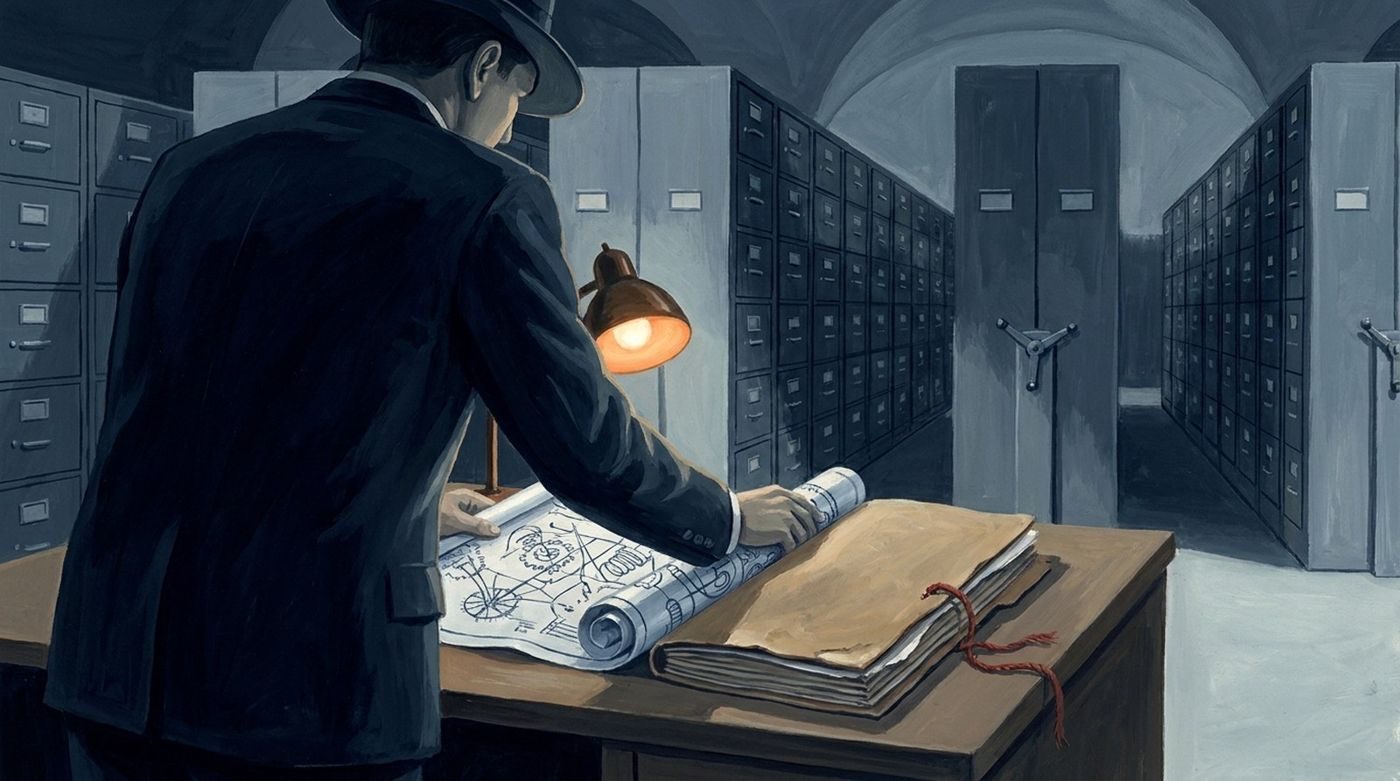
The patent office passes applications to the defense agencies, which can ask for a secrecy order. Under the statute the Commissioner of Patents "shall order that the invention be kept secret" and withhold the patent. An order runs one year and is renewed a year at a time, so it can last indefinitely. Disclose the invention anyway and the application can be held abandoned, with a fine of up to $10,000 and up to two years in prison.
The count
The Federation of American Scientists publishes the USPTO's yearly figures. Orders in force rose from 6,057 in FY2022 to 6,155, 6,471, 6,543 and then 6,653 in FY2026. FY2024 alone added 356 new orders, 168 of them sponsored by the Navy and 113 by the Air Force. In FY2026, 38 new orders were "John Doe" orders, placed on private inventors who had no government contract.
The secret list
Screeners work from the Patent Security Category Review List, which is itself withheld. FAS obtained the 1971 edition. As FAS describes it, the list has groups for propulsion, power supply and energy conversion, and flagged solar cells above 20 percent efficiency and energy conversion above 70 to 80 percent. A 2009 edition came out heavily redacted and the current one was refused. Known cases include George Davida's cryptography application, sealed at the NSA's request in 1978, and the Phasorphone of the same year.
Where it meets the UFO story
The Act sits beside the Atomic Energy Act as a second legal route by which physics can be kept out of print. On a UAP Gerb livestream a co-host tied it to Townsend Brown and to antigravity research that "stopped being posted publicly". That link is his reading. Whether any order covers gravity, propulsion or superconductors cannot be checked, because the orders are secret by design.
Open questions
- How many of the 6,653 orders fall under the propulsion and energy-conversion groups of the review list?
On the record
- 35 U.S.C. 181 to 188.
- USPTO secrecy order counts, FY2005 to FY2026, as compiled by FAS.
Connected
- Atomic Energy Act of 1954 documentSister secrecy law
- Defense Science Board Task Force on Secrecy, final report (1970) documentSame secrecy system
- Gravity and antigravity research fieldMay cover
- Thomas Townsend Brown personTied to (per a Gerb co-host)