Robert M. Wood
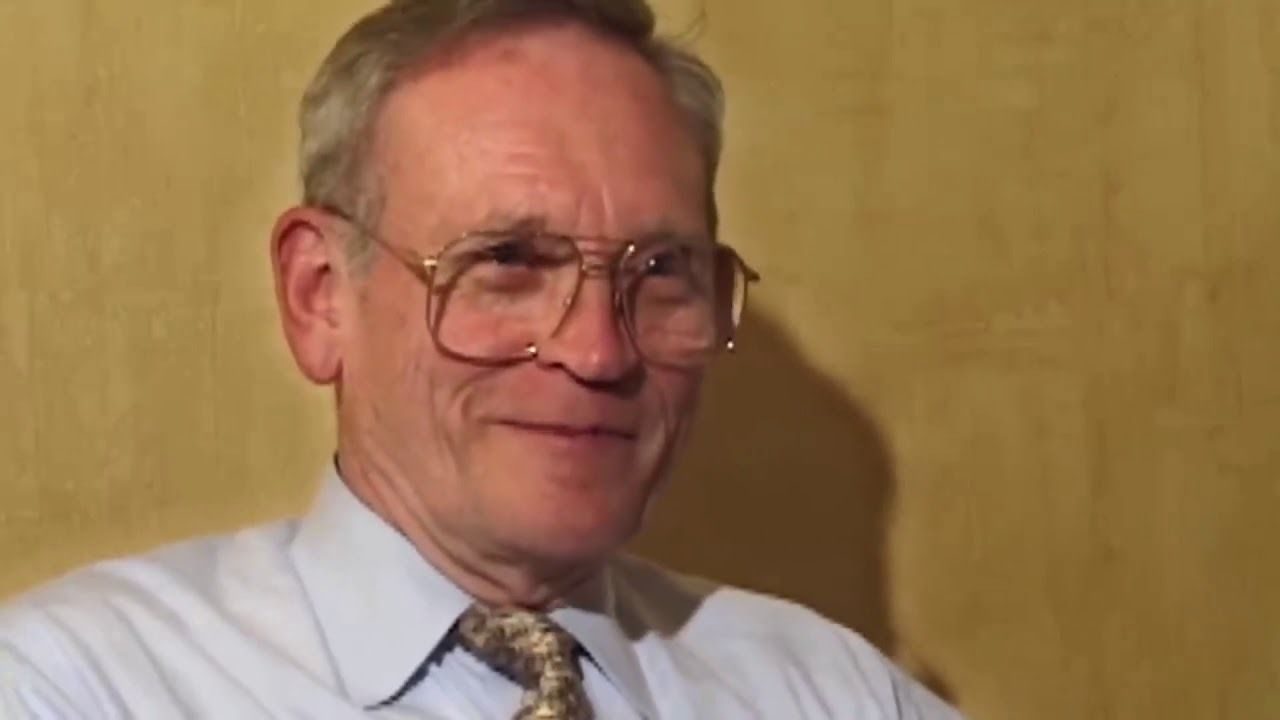
Robert M. Wood is the McDonnell Douglas physicist who, by his own account, talked his company into paying for a study of UFOs and gravity control in the late 1960s and then ran it. A Cornell Ph.D. with 43 years at Douglas and McDonnell Douglas, he later spent decades with his son [Ryan Wood](/person/ryan-wood/) testing the Majestic 12 papers.
Wood's published career record is a defence engineer's: the Teflon layer that kept the Nike Zeus missile from overheating (1956), the company's research and development department (1962), its internal research budget (1976), "a highly classified intelligence program" (1983), and the Space Station bid (1984). The man who ran the company's internal research money for years also ran, by his own account, its study of UFO propulsion. The career record does not mention that study. He tells the story himself, in interviews and in the UFO press, and both a 1978 retelling and his own archive's timeline give it a name.
The joke that became a project
His boss had to tell the Air Force how the company would get to orbit and back ten years on. "Ray why don't we tell them how the alleged UFO's do it?" Wood says he meant it as a joke. He was told to work it out. Fifty books later he went to management: "the UFO's are clearly coming from someplace else, they're clearly manned", and "the only question is whether we're gonna figure out how they work before Lockheed or after."
McDonnell Douglas, he says, "over several years put in about 500,000 dollars worth of research effort under my direction to study gravity control, techniques and also analyze UFOs". It hired Stanton Friedman and "some police detectives to interview witnesses, abductees". Leonard Stringfield's 1978 MUFON paper, as summarised later, calls it BITBR, "Boys in the Back Room": four full-time and three part-time staff from 1967, with lab work, field observations and a literature study. Through it Wood met James E. McDonald and J. Allen Hynek. In 1969 he recommended shutting it down for "little technological payoff".
Writing about it
He kept publishing on the subject while still at the company: "Testing the Extraterrestrial Hypothesis" (AIAA and World Future Society, 1975), "The Extraterrestrial Hypothesis Is Not That Bad" (Journal of Scientific Exploration, 1991), and "A Little Physics... A Little Friction: A Close Encounter with the Condon Committee" (International UFO Reporter, 1993). He sat on the boards of MUFON and the Fund for UFO Research, and was elected to the council of the Society for Scientific Exploration.
The Majestic years
After retiring he turned to Majestic 12. With Ryan he wrote "Another Look at Majestic" (MUFON UFO Journal, March 1999) and built majesticdocuments.com. On why the secret holds, he speculates that "a group of people maybe renamed called the majestic twelve committee" weighs the case for telling the public and finds that there is more to lose by telling than by keeping quiet.
On the record
- His published career record and publication list (majesticdocuments.com).
- "The Giant Discoveries of Future Science", McDonnell Douglas Paper I-782, August 1968.
Open questions
- Is there a McDonnell Douglas record of the study, its budget or the BITBR name, beyond Wood's own account and Stringfield's?
- What did Wood brief the Air Force in the talk that started it, and when?
Claims
Connected
- Gravity and antigravity research fieldGravity research
- Lockheed Martin Skunk Works orgSaw as the rival
- McDonnell Douglas (now Boeing) orgEngineer and manager (1956 to 1993)
- Majestic 12 orgResearcher
- Ryan S. Wood personFather of