2018 · Ultimi Scopuli, south polar layered deposits, Mars
A lake under the Martian south pole?
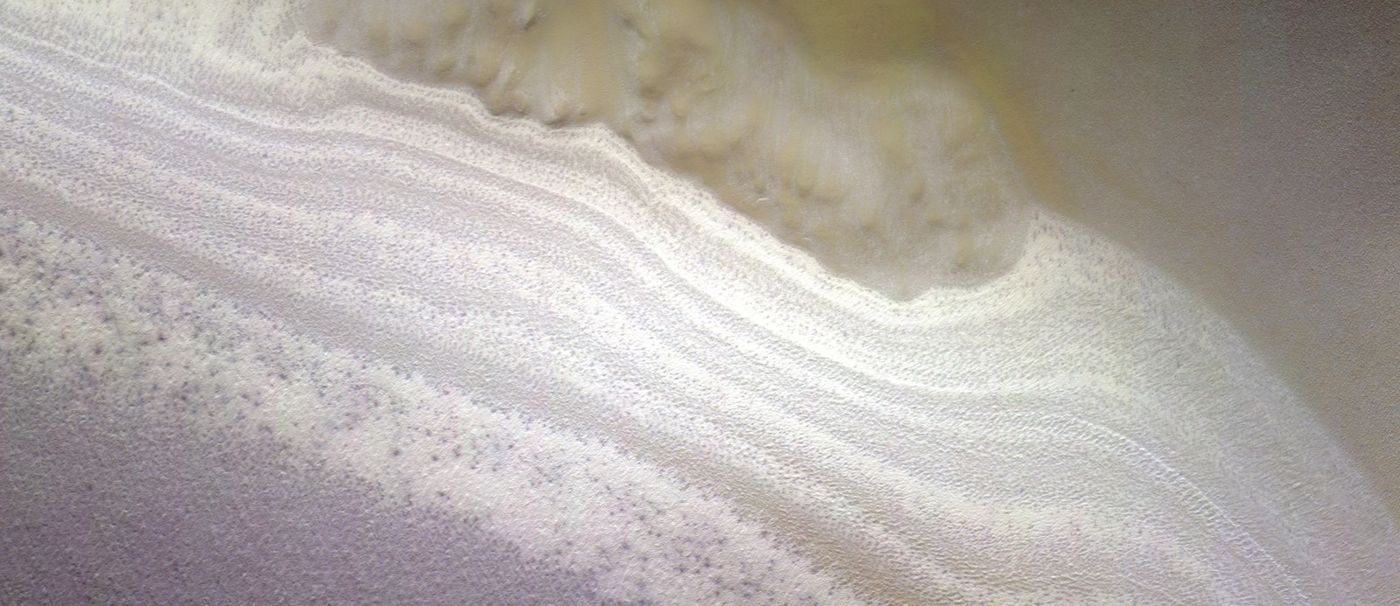
Layers of ice and dust in the south polar layered deposits of Mars, seen by the CaSSIS camera on ESA's Trace Gas Orbiter (2018). The radar echo was found about 1.5 km beneath deposits like these. · ESA/Roscosmos/CaSSIS
When2018
WhereUltimi Scopuli, south polar layered deposits, Mars
In 2018 an Italian team using the MARSIS radar on ESA's Mars Express reported a bright reflection 1.5 km under the south polar ice, read as a briny lake, the first sign of stable liquid water on Mars today. Later papers proposed other materials that reflect radar the same way; natural alternatives proposed, not demonstrated.
How plausible · High
Peer-reviewed orbital radar found the bright reflector; reading it as a lake is contested by later papers. (Revised 2026-10-23: a single proposed explanation is noted, not deducted.)
- ●●Access ESA's MARSIS radar.
- ●●No gain sought Science.
- ●●Restraint Alternatives are proposed, not demonstrated.
- ●●Character record Peer-reviewed in Science.
- ●●Checkable details check out Published data.
- ●●Physical traces or official reaction Instrument data.
Plausibility weighs how well an account fits where secrecy hides the documents by design, so missing records never count against it. Strength measures what is documented. Assessed 2026-10-23.
Claims
MARSIS radar on Mars Express found a bright reflector about 20 km wide, 1.5 km under the south polar ice, best read as a lake of liquid brine.firsthandOn the recordRoberto Orosei et al. (INAF), Science (2018)
Frozen clays, saline ice or layering could produce the same bright echo.firsthandSourced, unconfirmedlater papers, incl. York University (2021)