Project 1794 Final Development Summary Report (1 June 1956)
On 1 June 1956 Avro Aircraft Limited of Malton, Ontario, sent the US Air Force its final report on Project 1794, a disc-shaped aircraft designed to take off vertically and fly at between Mach 3 and Mach 4 above 100,000 ft. The work ran under USAF Contract No. AF33(600)-30161 from April 1955 to May 1956.
The report calls the craft "a jet-propelled all-wing aircraft of circular planform" and finds the design feasible, while saying "additional tests are required to substantiate" its performance. It asks for $3,168,000 for 18 to 24 months more. The National Archives published its drawings in September 2012.
It matters here because it puts an Air Force-funded flying disc in the same years that Air Force intelligence was judging saucer reports against "unconventional aircraft ... under consideration in the US and Canada".
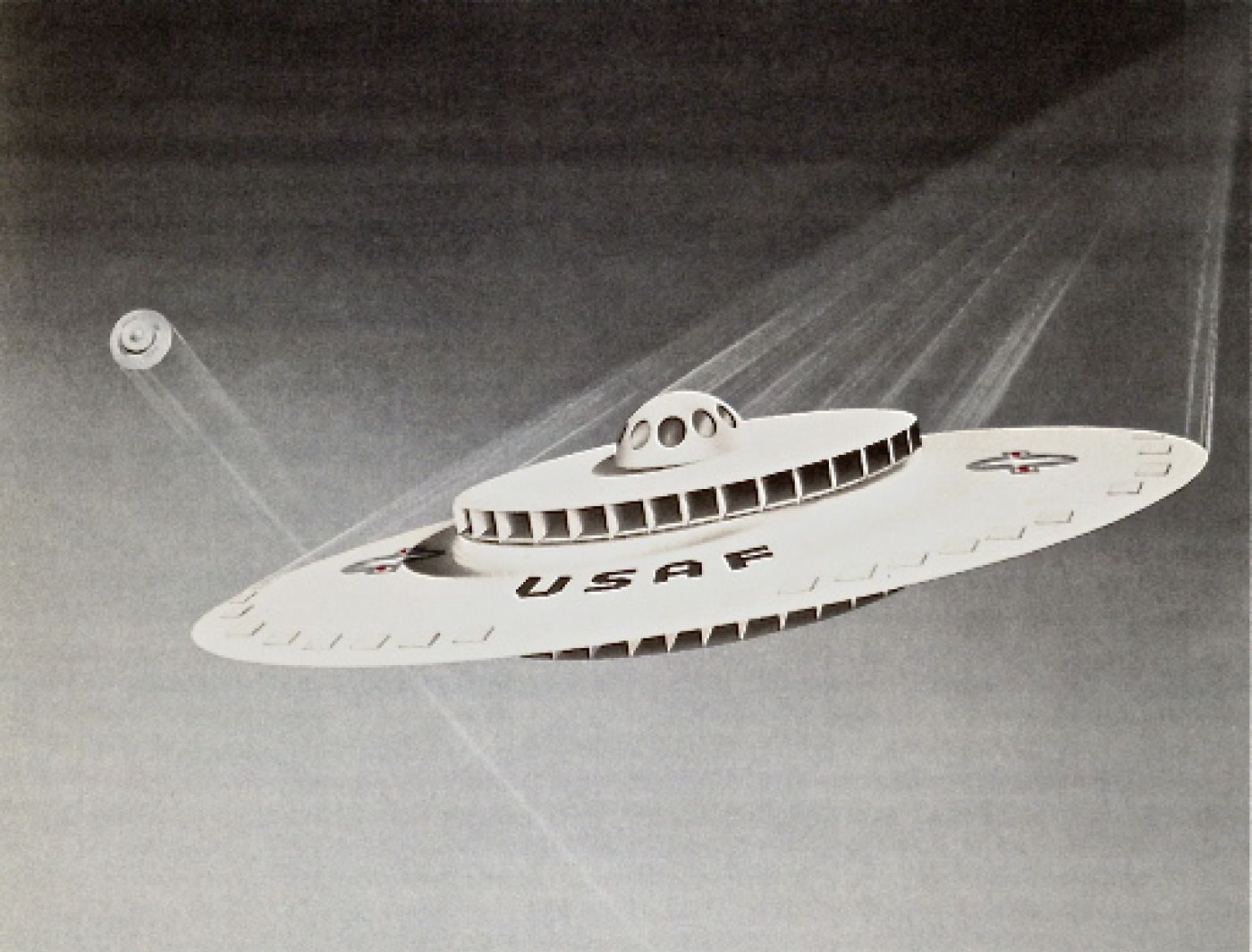
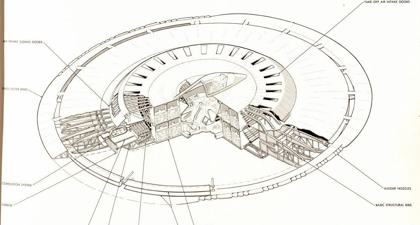
The craft is "a jet-propelled all-wing aircraft of circular planform". Six Armstrong Siddeley Viper engines drive a ducted fan, and the same jets that lift it also steer it, so there are no separate controls for hovering. The report's verdict is that this is feasible "through the whole flight range from ground cushion take-off to supersonic flight at very high altitude". Range: about 1,000 nautical miles. It was approved by J. C. M. Frost of Avro's Special Projects Group.
What the Air Force was told it would cost
The report does not claim the job was done. "Additional tests are required to substantiate" the performance, it says, especially the air intake flow and nozzle losses. It proposes a broader programme of 18 to 24 months "in the total amount of $3,168,000". That figure is the estimate for the next phase, not what the 1955 to 1956 contract cost. Models had already been through wind tunnels at the Wright Air Development Center and MIT's Naval Supersonic Laboratory.
How it came out
The National Archives' National Declassification Center published the report's cutaway drawings on 20 September 2012, from Aeronautical Systems Division records (RG 342, UD-UP 138, NND 63253, boxes 35 and 58). Its blog post was titled "How to Build a Flying Saucer" and noted the drawings' "strong resemblance" to the saucers of 1950s science-fiction films.
The same shape in a sighting file
Three months into the contract, on 6 July 1955, an HQ USAF committee reviewing a KC-97 crew's radar-visual sighting near Newfoundland wrote that "no intelligence is available to support or deny the existence of unconventional Soviet aircraft comparable to those under consideration in the US and Canada". That file is mostly about Avro's earlier "Project Y2". The CIA reached for "Project Y" too, in its October 1955 analysis of Senator Russell's sighting.
Open questions
- Was the $3,168,000 follow-on programme approved, and does it lead to the WS-606A supersonic VTOL programme cancelled in December 1961?
- When exactly did the Air Force declassify the report?
On the record
- The report, 1 June 1956, Avro Aircraft Limited, USAF Contract No. AF33(600)-30161 (scan at UFOScans; also on Scribd, document 110537650).
- National Archives NDC blog post, 20 September 2012.
Cases
- 1955KC-97 crew and GCI radar: unidentified object near Newfoundland (6 July 1955)
- 1955Senator Russell's flying saucers
Connected
- Avro Aircraft Ltd (Avro Canada) orgWritten by
- United States Air Force orgContract holder
- Wright-Patterson AFB & 'Hangar 18' orgWind-tunnel tests