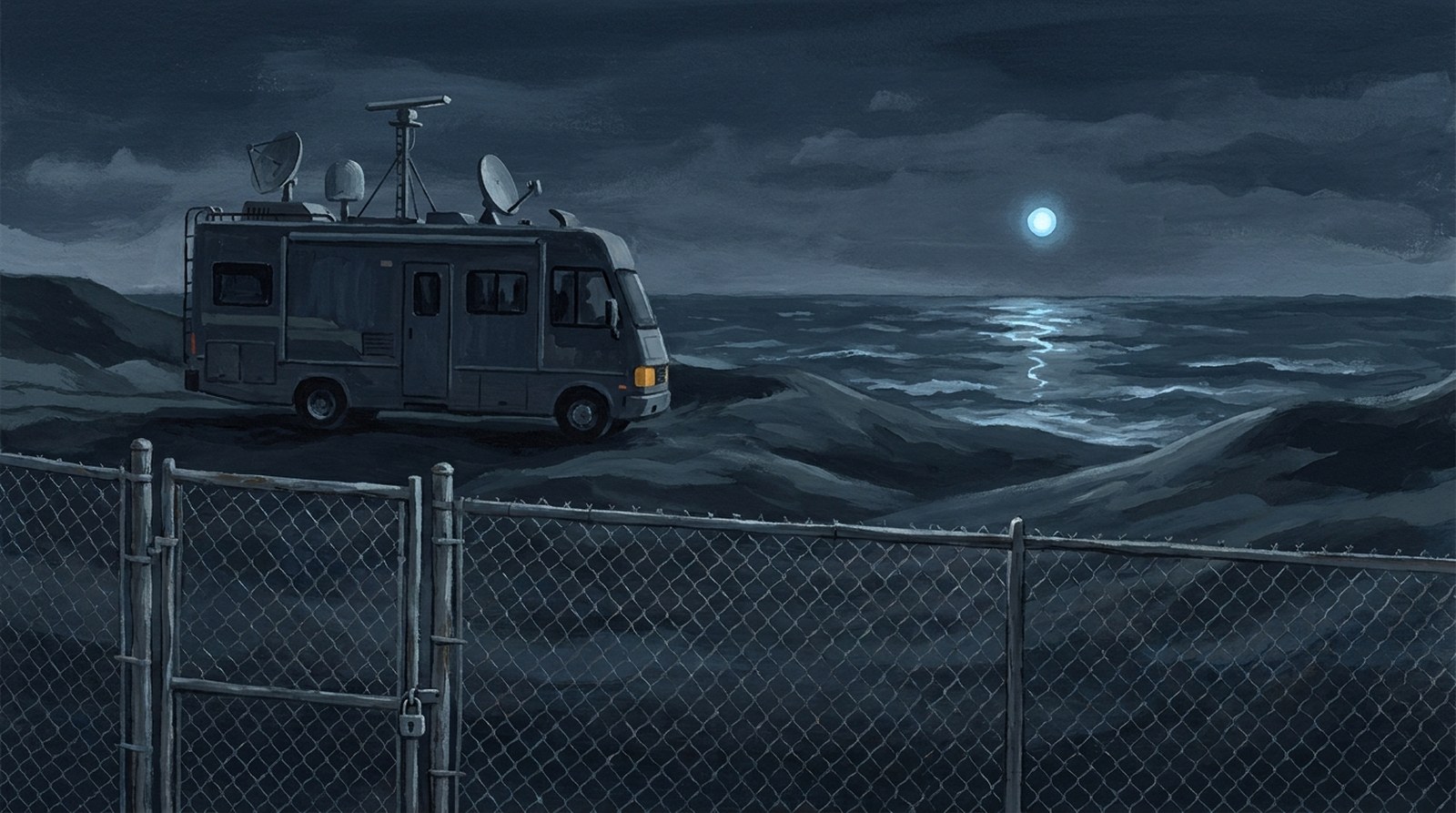
Gone quiet
Civilian UAP science goes quiet once it takes government money or hands over its data. In 1953 a CIA panel recommended that civilian saucer groups "should be watched". In 2009 the Pentagon's contractor BAASS paid MUFON $56,000 a month for its cases, and every investigator signed away media contact. SkyWatcher, the company that said it could call craft in, posted for the last time seven weeks after an airspace order closed the sky over its Texas base. The Tedesco brothers say their Long Island RV team now works with the FBI, and that part of the work is something they "can't really discuss at this time".
The voices it opens with
Before UAP Trail says a word, the video lets others speak. Each clip is linked at its second in the video.
Such organizations should be watched because of their potentially great influence on mass thinking if widespread sightings should occur.
The trick would be to describe the project so that, to the public, it would appear a totally objective study.
Strict confidentiality in force during the deployment and no media communication.
That partnership is still ongoing and it's actually expanding in certain areas, some of which we can't really discuss at this time.
The claim, in UAP Trail’s words
“Civilian UAP science goes quiet once it takes government money or hands over its data, and the groups that stay outside keep publishing.”
Our reading across 29 records
How it split
Watched
How it unfolds: four eras
Watched
Under contract
The contractor years
The new quiet
What carries it
Every event in the narrative, sorted by what it rests on. The on-record events are the skeleton; the rest is what UAP Trail hangs on it.
Galileo and UAPx never signed on, and both keep publishing, null results included. Some of the quiet ones come back years later as witnesses: Bigelow on 60 Minutes in 2017, Kelleher and Lacatski in 2021, the BAASS files in October 2026. Money ended some of these efforts: AAWSAP's funding was cut after about two and a half years, and Bigelow Aerospace laid off its staff in 2020. It does not explain where the data went.