The Condon study (1966-1969)
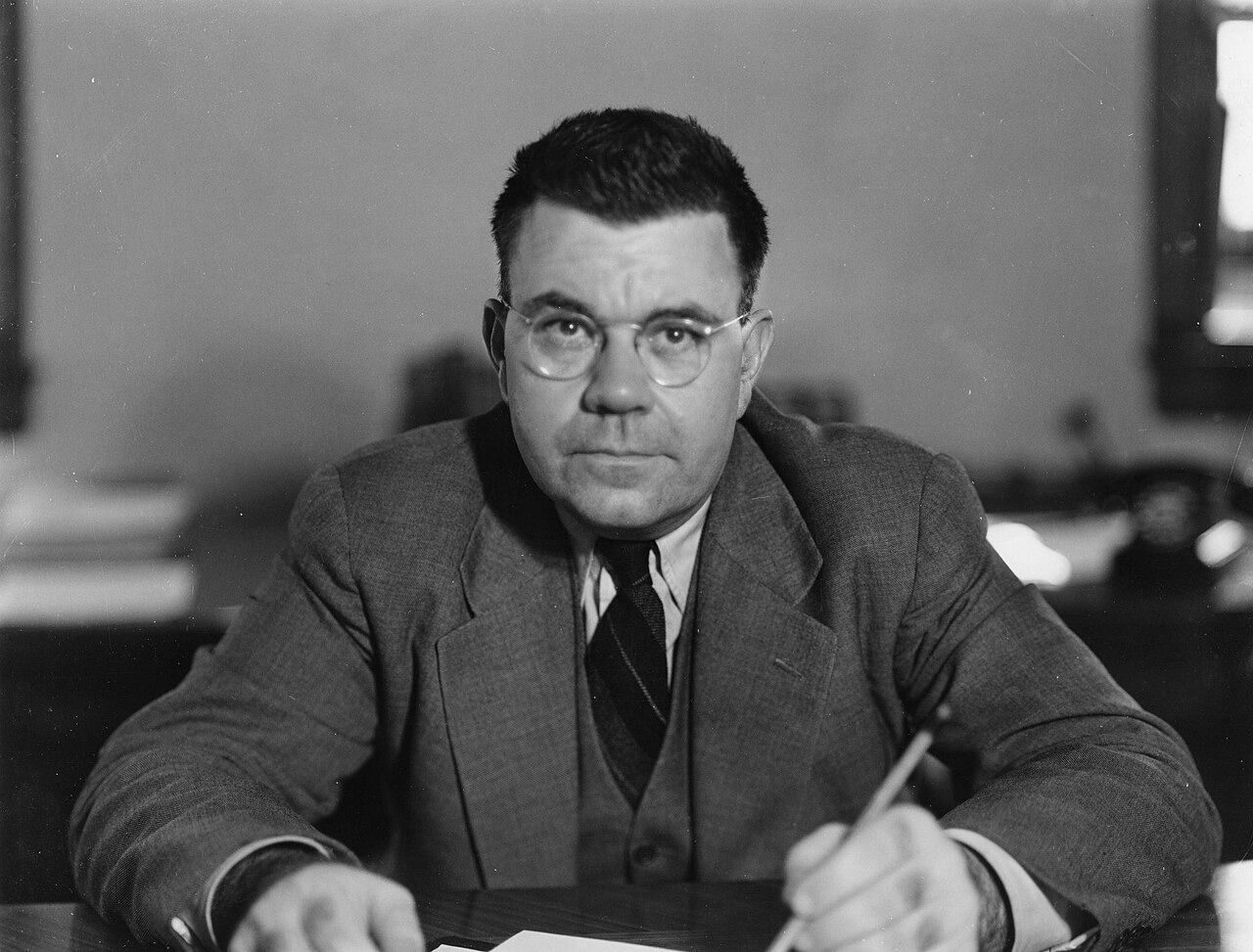
The Condon study was the US Air Force's paid scientific review of UFOs, run at the University of Colorado under the physicist Edward Condon, whose 1969 report gave the Air Force its reason to close Project Blue Book. Its coordinator wrote, before the contract began, that "the trick" was to make it look objective to the public, and the CIA's photo analysts helped it on condition that their role stay unmentioned.
The university's proposal budgeted $313,000 for fifteen months from 1 November 1966, with Condon as scientific director and Robert Low as full-time project coordinator. A CIA memo of February 1967 calls it "a $300,000 contract" let by the Air Force. The study was meant to settle the question that Project Blue Book had left open, and its verdict did: in January 1969 it found no case for further extensive study, the National Academy of Sciences endorsed it, and Blue Book closed on 17 December 1969.
"The trick"
On 9 August 1966, before the contract was signed, Low sent university officials a memo titled "Some Thoughts on the UFO Project". The study, he wrote, would be run "almost exclusively by non-believers" who "could and probably would add an impressive body of evidence that there is no reality to the observations". Then:
The trick would be, I think, to describe the project so that, to the public, it would appear a totally objective study but, to the scientific community, would present the image of a group of nonbelievers trying their best to be objective, but having an almost zero expectation of finding a saucer.
He proposed studying "the psychology and sociology of persons and groups who report seeing UFO's" rather than the objects, so that "the scientific community would quickly get the message" (the Low memo). Condon himself told a 1967 lecture audience that the government should not study UFOs, "but I'm not supposed to reach that conclusion for another year".
The CIA's unsigned help
On 20 February 1967 Condon and four colleagues, among them Low and the staff scientist David Saunders, visited the CIA's National Photographic Interpretation Center. The meeting was held at SECRET. The CIA's own memo records the terms: work done for Condon "will not be identified as work accomplished by CIA", and the center's director advised Condon "to make no reference to CIA in regard to this work effort". NPIC would measure photographs but "will not prepare any written comments" or draw conclusions. After a second briefing, on photographs from Zanesville, Ohio, on 5 May 1967, Condon said he "wished to keep a channel open" into the office, and the two sides discussed a photo review that would let Condon say he had analysed all the photographs in NICAP's files. The CIA had steered the subject once before, through the 1953 Robertson Panel.
Two scientists out
The memo surfaced inside the project in 1967 and reached the physicist James McDonald. In February 1968 Condon dismissed Saunders and Norman Levine, two staff Ph.D.s, over it, telling Saunders "For an act like that, you ought to be ruined professionally", as John G. Fuller reported in Look on 14 May 1968, the article that published the memo. The project's administrative assistant resigned. McDonald and J. Allen Hynek later said the committee could not explain about 25 to 30 percent of the cases it examined, a share Condon's summary passed over.
What closed
The report ended Blue Book. Its defenders, the National Academy among them, judged the work sound. Believers read the memo and the CIA terms as a door shut by design. The documents show a conclusion foreseen in advance and an intelligence office that asked to stay unnamed; they do not show who, if anyone, ordered the result.
Evidence, in date order
- Aug 1966Robert J. Lowdocumentthe 9 August 1966 'trick' memo, published in Look in May 1968 Robert Low's 'trick' memo on the Condon study (1966)
- Oct 1966University of Coloradodocumentproposal budget, $313,000, 1 November 1966 to 31 January 1968 University of Colorado proposal 66.1.253, budget
- Feb 1967CIA (NPIC)officialmemorandum for the record of Condon's SECRET-level visit, 20 February 1967 CIA: Visit of Dr. Condon to NPIC, 20 February 1967
- May 1967CIA (NPIC)officialmemorandum for the record of the Zanesville photo briefing for Condon, 5 May 1967 CIA: UFO Briefing for Dr. Edward Condon, 5 May 1967
How plausible · Very high
The study's framing and the CIA's unacknowledged help are documented in the coordinator's memo and the CIA's own memoranda.
- ●●Access Memos written by the people running the study and by the CIA office that helped it.
- ●●Cost of speaking Saunders and Levine lost their posts after the memo surfaced.
- ●●Character record University physicists, psychologists and CIA photo analysts.
- ●●Independent convergence The Low memo, Condon's 1967 remark and the CIA memoranda are independent of one another.
- ●●Checkable details check out Released CIA records, the published memo and the public report.
- ●●Fits the documented skeleton Fits the documented Robertson Panel and Blue Book record.
Plausibility weighs how well an account fits where secrecy hides the documents by design, so missing records never count against it. Strength measures what is documented. Assessed 2026-11-15.
On the record
- Low's memo of 9 August 1966, "Some Thoughts on the UFO Project".Blue Book
- University of Colorado proposal 66.1.253: $313,000, 1 November 1966 to 31 January 1968.
- CIA memoranda for the record of 20 February and 5 May 1967.
- The Condon Report (1969), the NAS endorsement, and Blue Book's closure on 17 December 1969.Blue BookMcMinnville: two photos of a disc over the Trent farm
Claims
Similar cases
Connected cases
- Blue Book 1959The program it closed
- McMinnville: two photos of a disc over the Trent farm 1950Analysed by the Condon study
- Robertson Panel 1953The 1953 precedent
People and organizations
- Central Intelligence Agency orgHelped quietly (NPIC)
- United States Air Force orgFunded by
- Harry Turner's secret JIO assessment of the UFO problem (Australia, May 1971) documentSays Condon's conclusions conflict with its contents
Sources
- Project 1947: University of Colorado proposal 66.1.253, budget (1 Nov 1966 to 31 Jan 1968)
- John G. Fuller, 'The Flying Saucer Fiasco', Look, 14 May 1968 (Project 1947 transcription)
- CIA memorandum for the record, 'Visit of Dr. Condon to NPIC, 20 February 1967' (Internet Archive CIA UFO collection)
- CIA memorandum for the record, 'UFO Briefing for Dr. Edward Condon, 5 May 1967' (Internet Archive CIA UFO collection)
- Wikipedia: Condon Committee
- UAP Gerb, 'The Origin of the UFO Stigma' (YouTube, 10 Feb 2024)
 Project Blue Book1959
 McMinnville1950
 The CIA's Robertson Panel1953