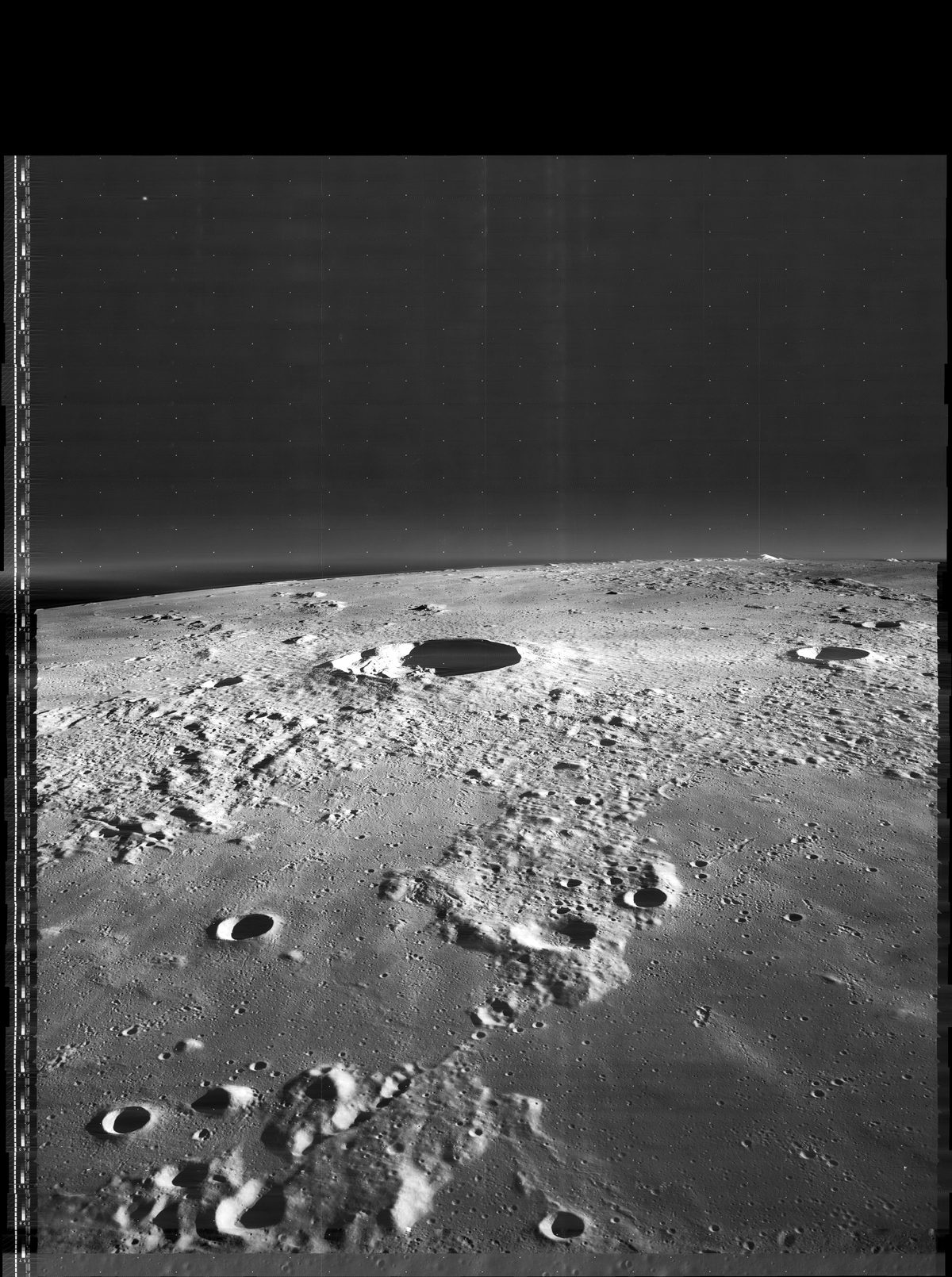
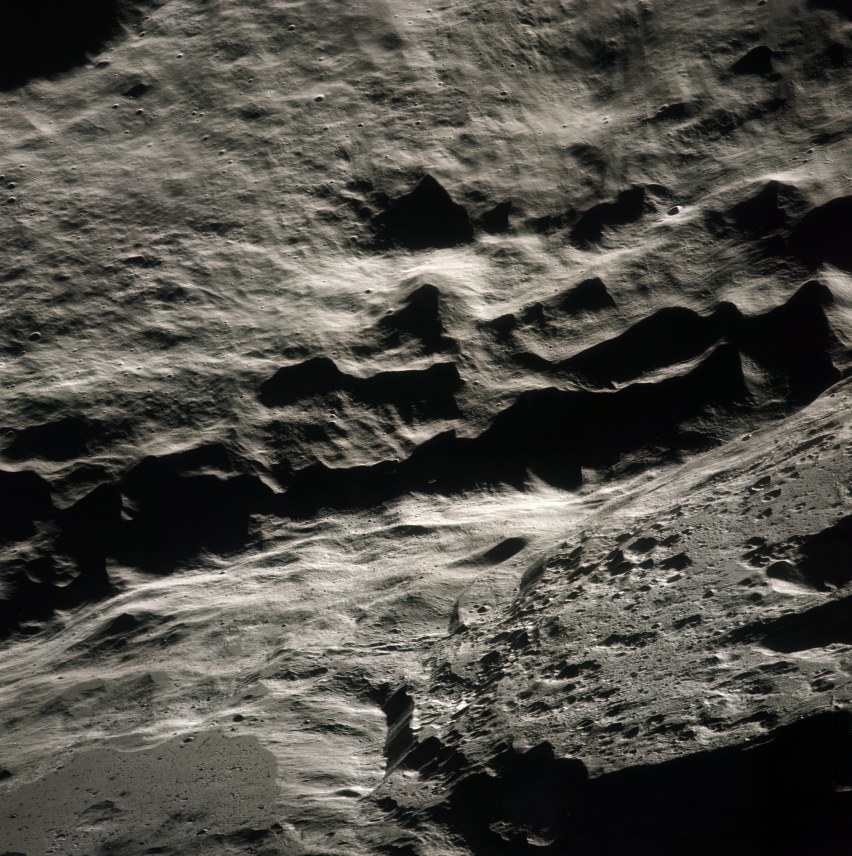
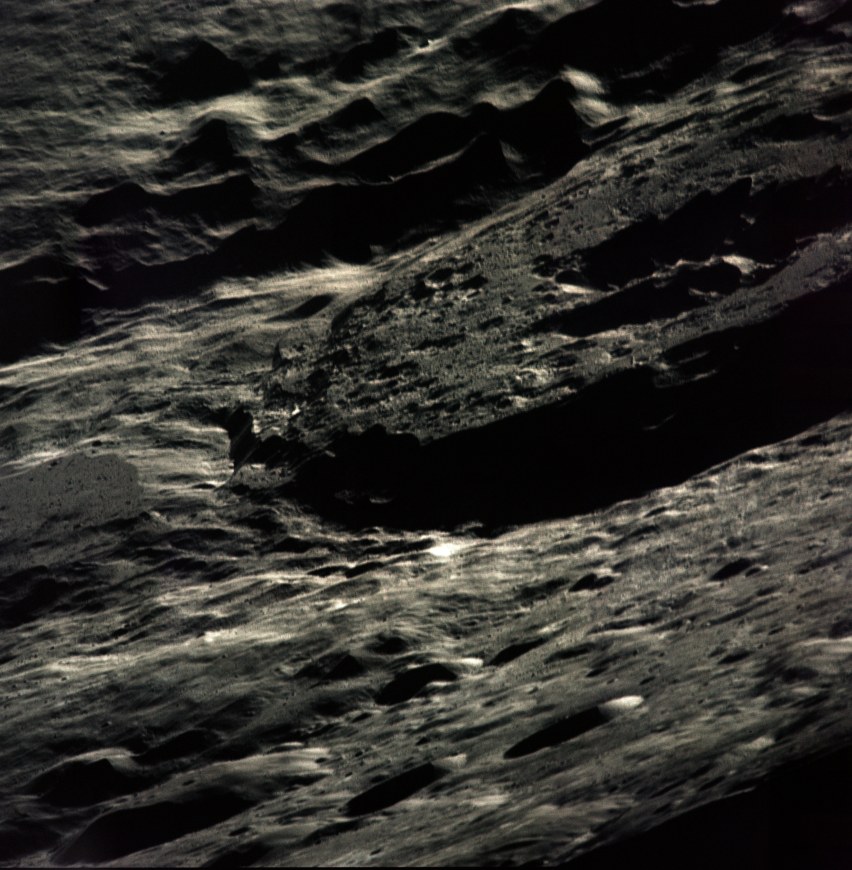
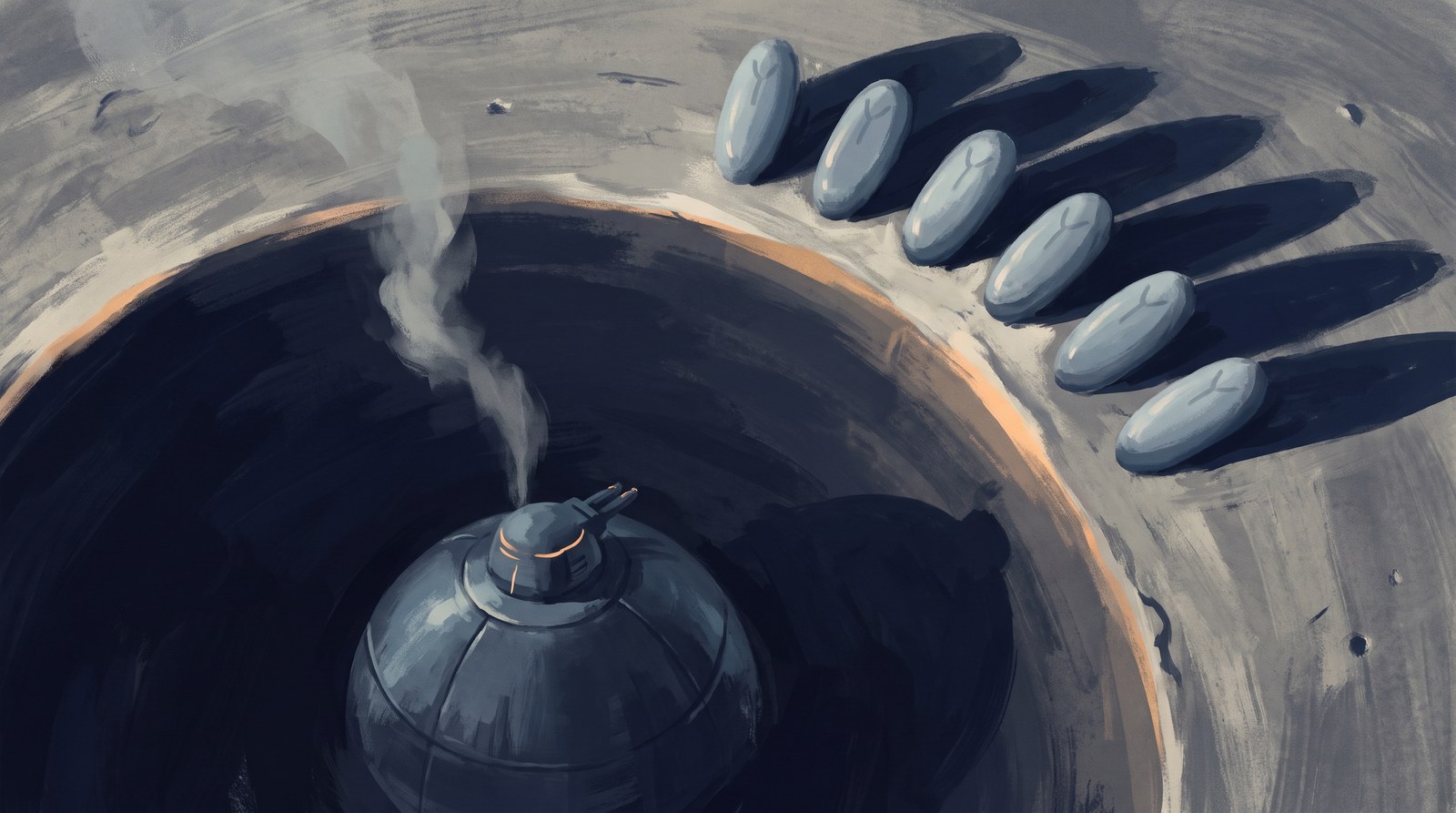
George H. Leonard’s tour of NASA’s own photographs, 1976
An amateur astronomer spends years with NASA’s Moon photographs and concludes that the Moon is occupied: giant machines are reshaping its craters, and the space agencies know.
Who wrote it.George H. Leonard, an amateur astronomer who had watched the Moon through a 6-inch telescope since 1952 and collected NASA prints for years. The name is believed to be a pen name.
What he says. NASA’s own photographs show machines on the Moon, some miles across: rigs cutting crater walls, X-shaped “drones” spraying dust, pipes, domes, glyphs and lights. Somebody is mining or rebuilding the Moon, right now.
Why it matters. The book gave the plate numbers. Anyone could order the same NASA frames, and many still can today. It became the founding text for the Moon-anomaly hunters, and Ingo Swann leaned on it in Penetration.
What holds up. The photos are real NASA frames, and several things he points to are on record: astronauts did report flashes, NASA did run a programme to watch for lunar lights, and the Moon is seismically noisier than expected. His readings of the shapes are his own.
Leonard writes as a tour guide with a magnifying glass. We follow his eighteen chapters in four parts. Each has a short summary in his terms, the NASA frame he was looking at wherever we found it, and a note marked On the record or Worth knowing where we checked something. Quotes are kept short.
Part One
Getting out of the straitjacket
The preface and first two chapters set the rules: forget what you think the Moon is, and look at the pictures.
Preface
Three things he doesn’t know
Leonard says he has watched the Moon since 1952 and has studied NASA’s photographs for years. He counts the official tally: about 140,000 frames from Ranger, Surveyor, Lunar Orbiter and Apollo.
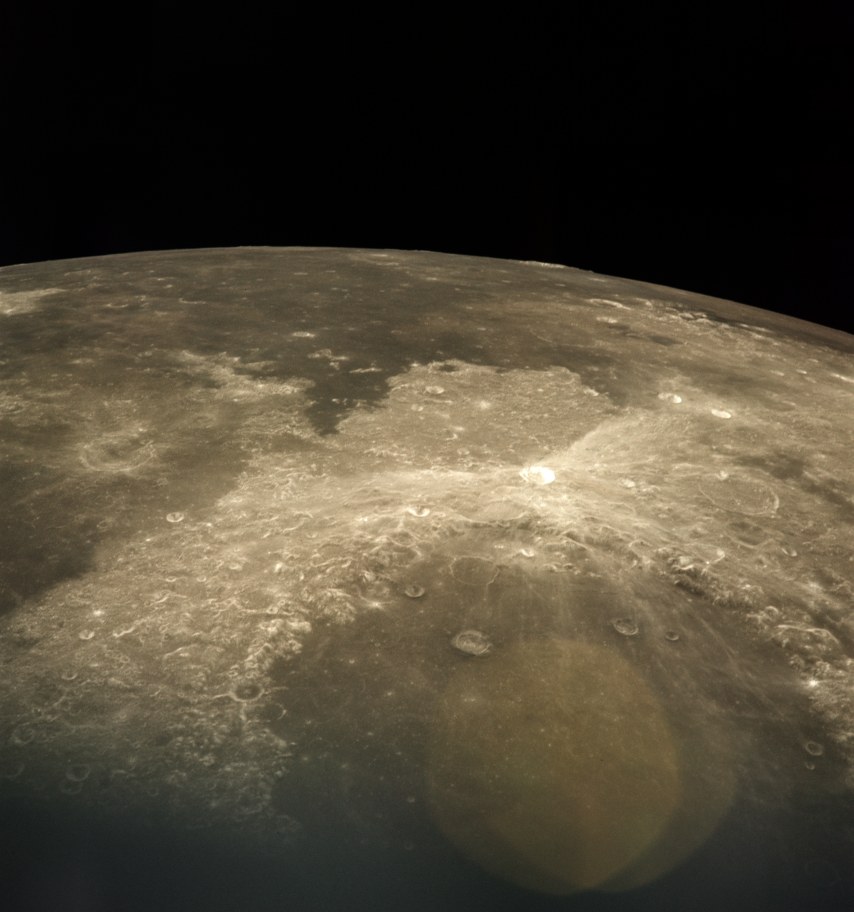
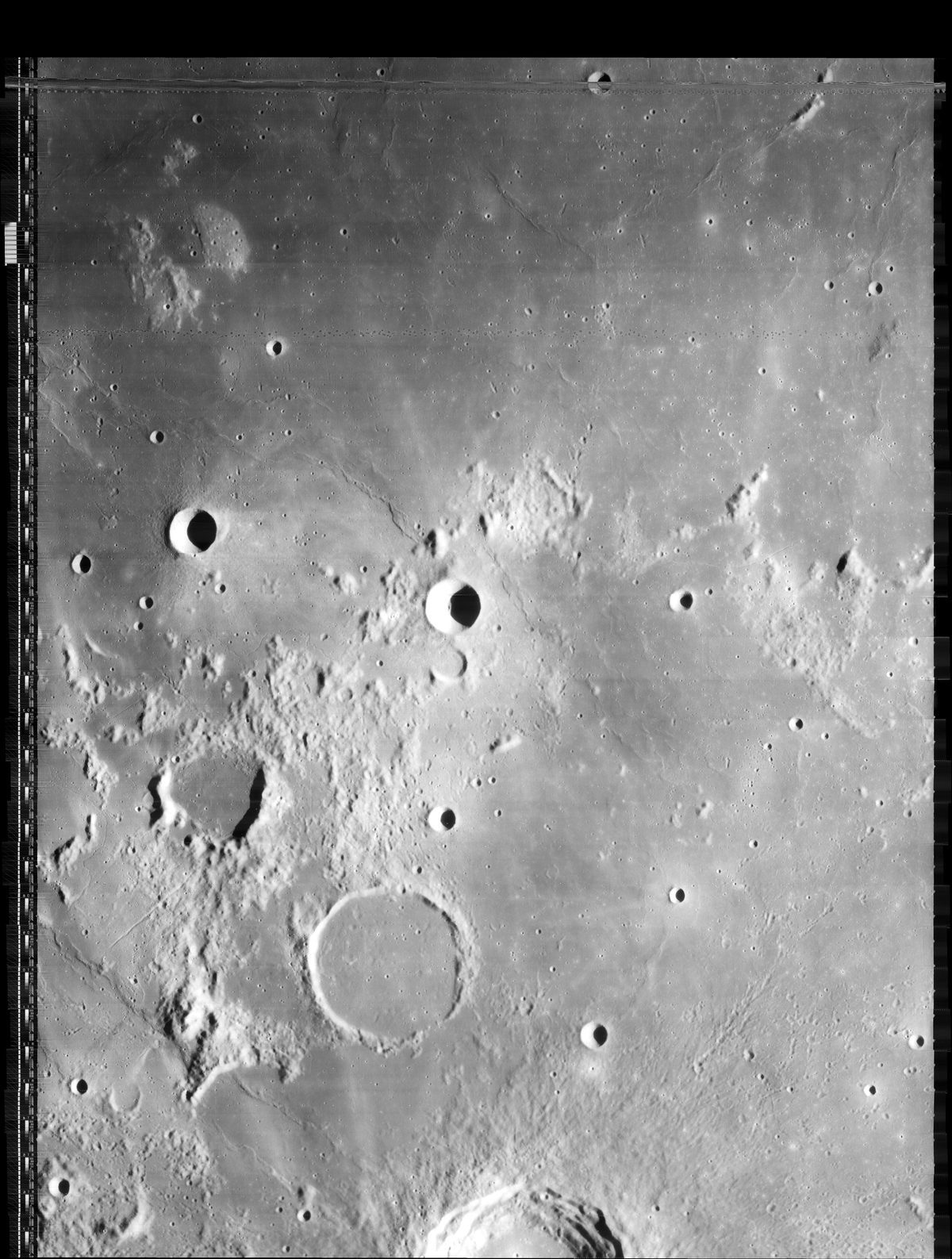
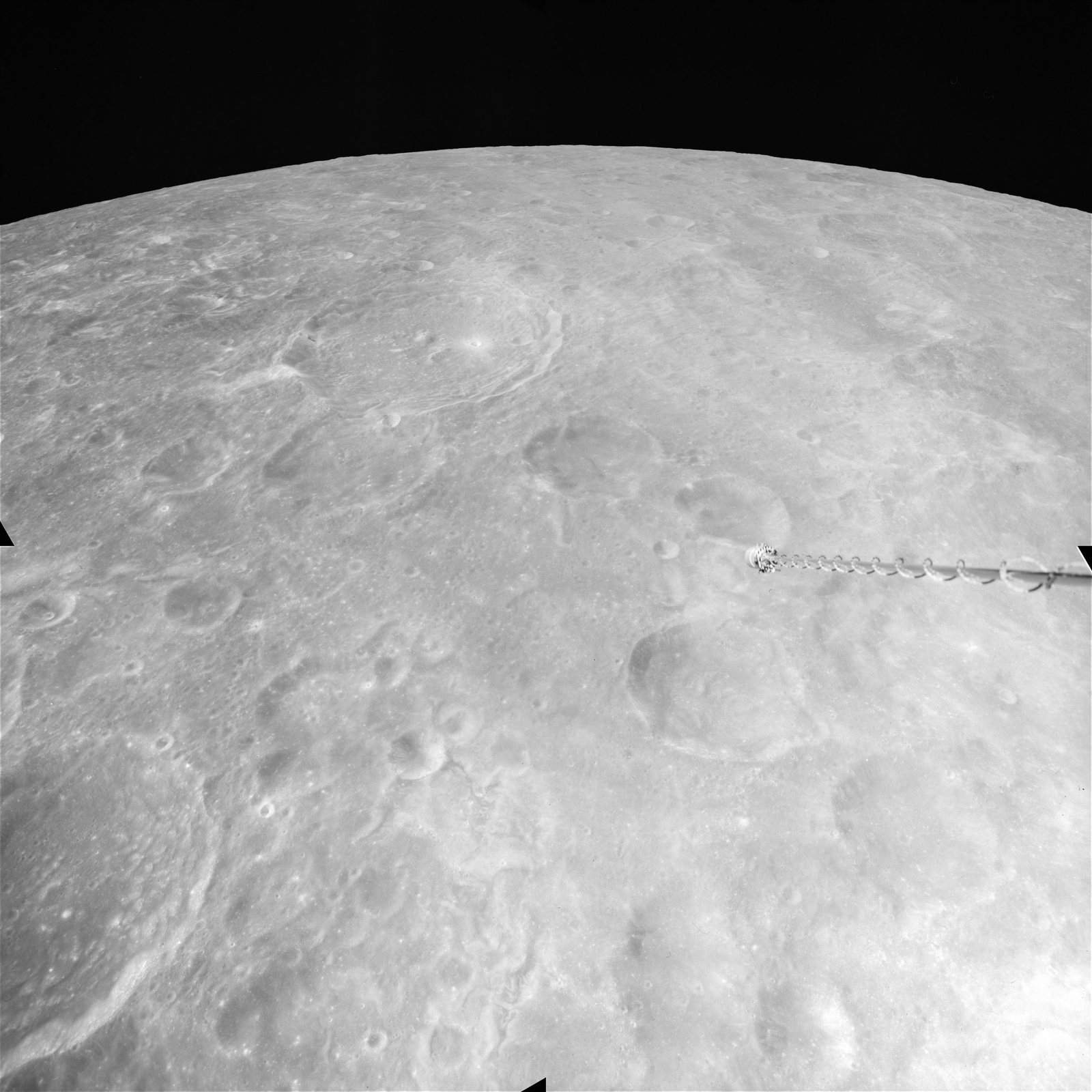
He starts with an old story. In 1953 the science editor John J. O’Neill reported a twelve-mile “bridge” on the edge of Mare Crisium and was laughed at. Leonard says an Apollo 16 photo of the same region shows several bridge-like shapes casting shadows.
Then he sets out his limits in three lines: “No, I do not know who They are”, where They come from, or precisely what Their purpose is. He only claims that They are there.
Leonard’s plate 1: Apollo 16 frame AS16-121-19438, looking across Mare Crisium toward Mare Tranquillitatis. The bright rayed crater is Proclus. This is where he places O’Neill’s “bridges”. NASA / JSC, scan via Arizona State University
On the recordO’Neill’s 1953 Crisium “bridge” was real news at the time; the British observer H. P. Wilkins said he saw it too. Later lunar scientists called it a trick of the light.
1
There’s change on the Moon. Go find it!
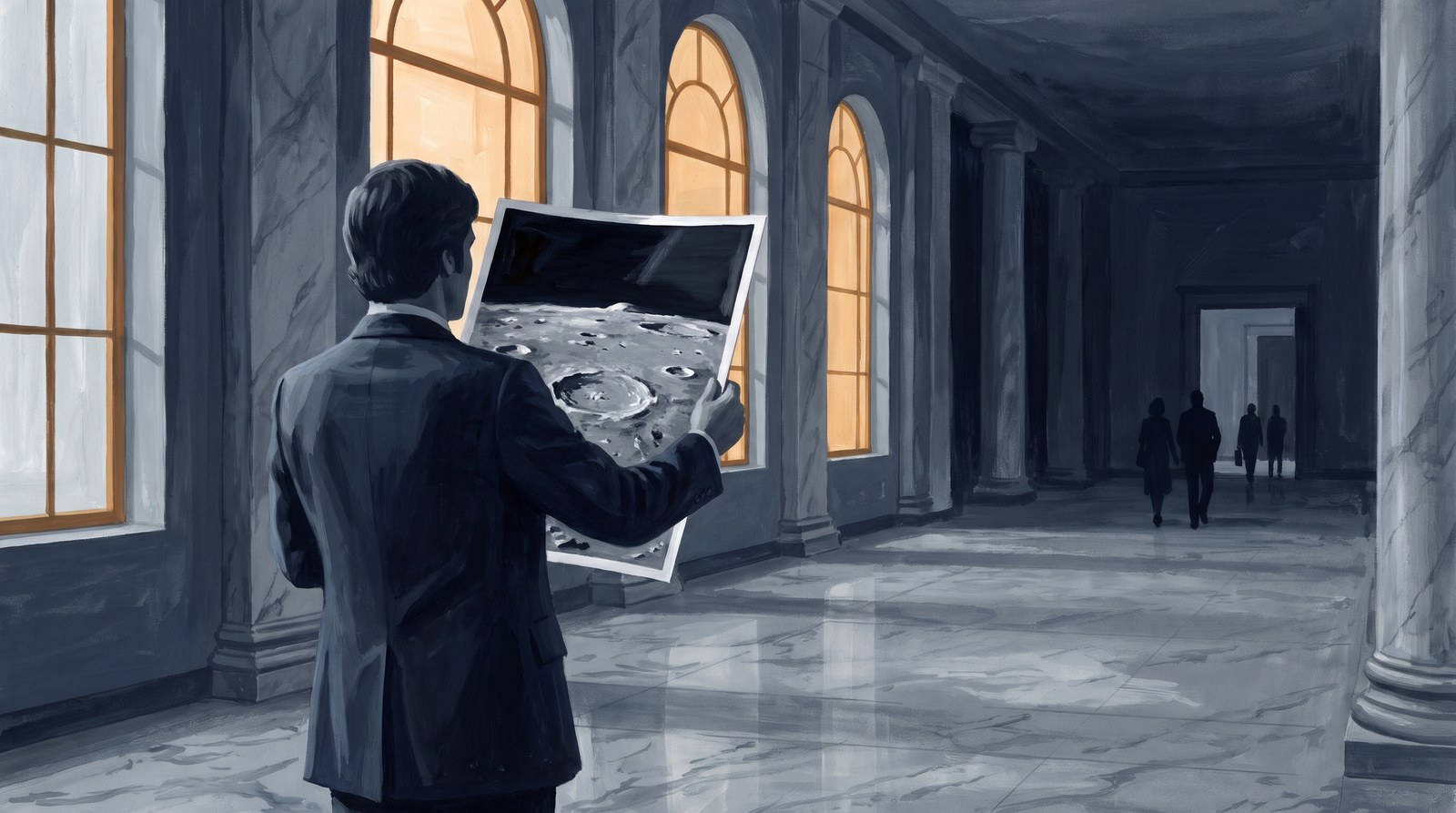
Leonard walks into a NASA office with a question: is there anyone who will “call a spade a spade” about what the photos show? He is sent to a former NASA scientist he calls Dr. Samuel Wittcomb, an engineer turned physicist who keeps up with the Moon as a hobby.
Three remarks ring in his head on the way in. Farouk El-Baz, the Apollo geologist: “We may be looking at artifacts from extraterrestrial visitors without recognizing them.” A British scientist, G. V. Foster, who said alien structures were waiting to be found. And a Canadian, Wilbur Smith: get out of the “strait jacket” of Earth-sized thinking.
Wittcomb becomes his sounding board for the rest of the book. Some of Leonard’s ideas he backs, some he laughs at.
Leonard in a NASA lobby in the early 1970s, waiting to ask his question. Illustration for uaptrail.com
Worth knowingWittcomb is a pseudonym, as Leonard says, and so are his NASA contacts. Their words reach us only through him.
2
A few facts about the Moon
A plain chapter of numbers: size, distance, gravity, a day two weeks long. Leonard leans on Isaac Asimov’s point that the Sun pulls on the Moon more than twice as hard as the Earth does. So why is it ours at all? Could it have been parked here?
He walks through the origin theories (torn out of Earth, formed beside it, captured) and finds none that fits. Some lunar rocks may be older than Earth. One option he keeps open: the Moon was driven into our solar system on purpose, eons ago.
On the recordThe Sun’s pull on the Moon really is about twice the Earth’s. Astronomers explain the orbit anyway, but the Moon’s origin is still debated.
Part Two
Machines at work
The heart of the book. Leonard goes plate by plate through what he sees as working machinery: gears, rigs, drones and pipes.
3
A motor as big as the Bronx
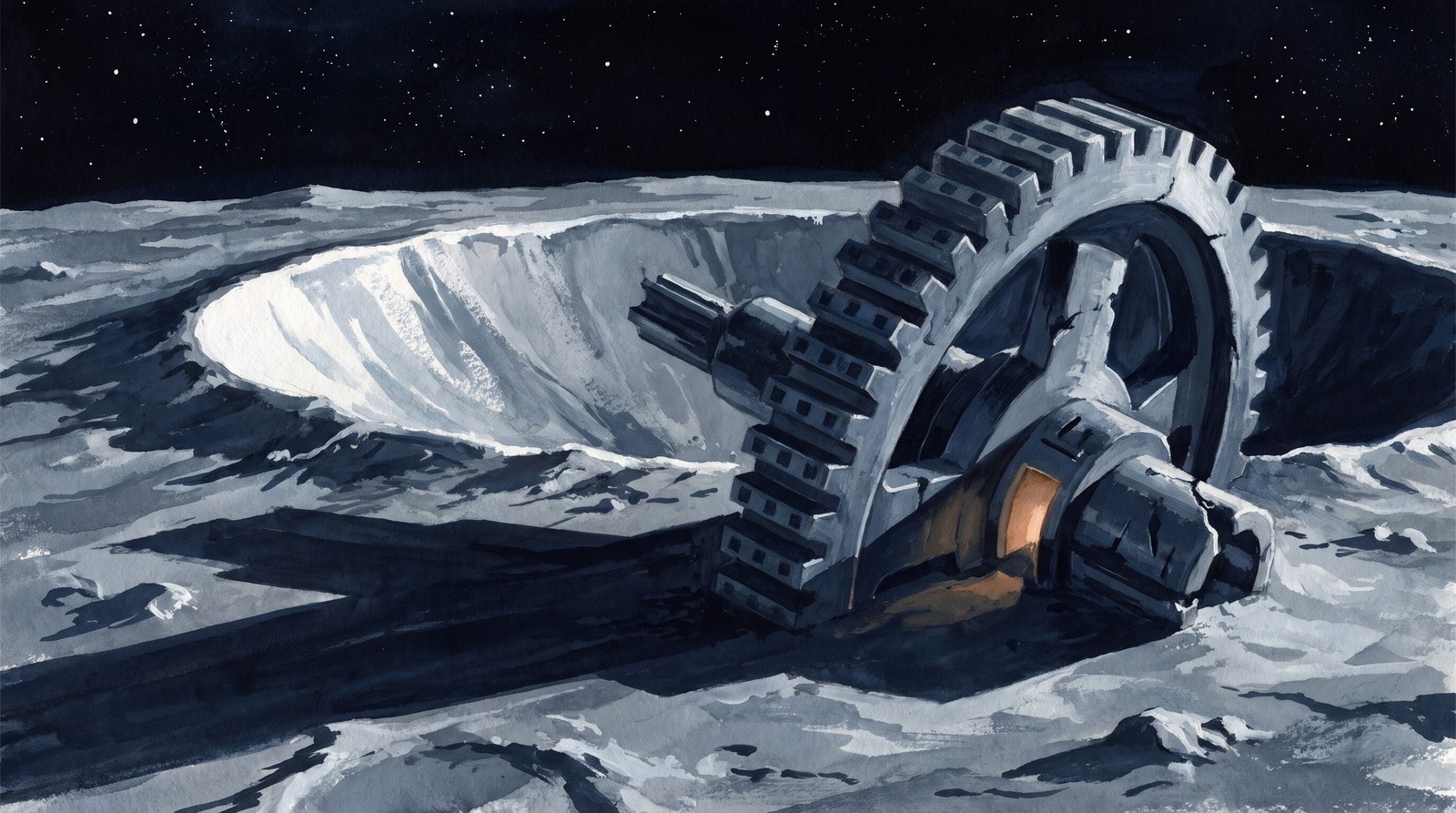
Between the craters Bullialdus and Lubiniezky, Leonard sees a huge “gear” with teeth, a mounting plate under it, and what looks like a generator. He measures it in miles.
He says the Apollo seismometers registered a lot of shaking from this area, and quotes a NASA engineer: “Highest signals I’ve seen on the Moon came from under Lubinicky.”
He then lays out the most radical idea he heard from a JPL engineer and an Oxford physicist: the Moon may be a hollowed-out vessel, steered here.
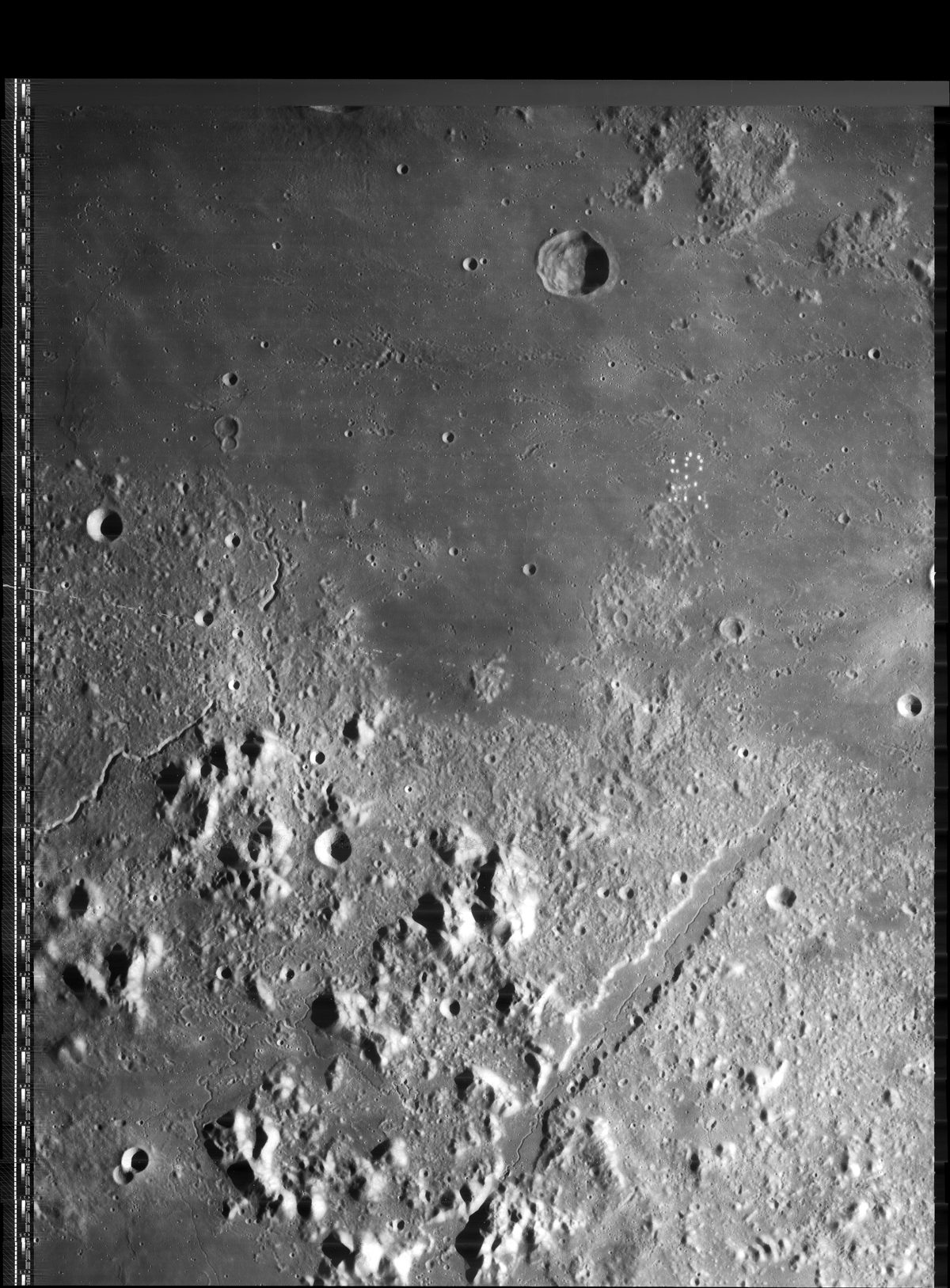
What Leonard describes at Lubiniezky: a gear miles across, with teeth, on a mounting plate. Illustration for uaptrail.comLunar Orbiter IV frame 125, the cross-reference his reissue gives for plate 3. Bullialdus is the large crater near the bottom. NASA / Lunar and Planetary Institute
Worth knowingThe “spaceship Moon” idea was published by two Soviet writers, Mikhail Vasin and Alexander Shcherbakov, in Sputnik magazine in 1970. Leonard’s engineers may have been echoing it.
On the recordThe Moon is seismically lively. When Apollo 12’s spent lunar module was crashed into it in November 1969, the seismometer recorded vibrations for close to an hour.
4
Pushing the Moon around: the Super Rigs
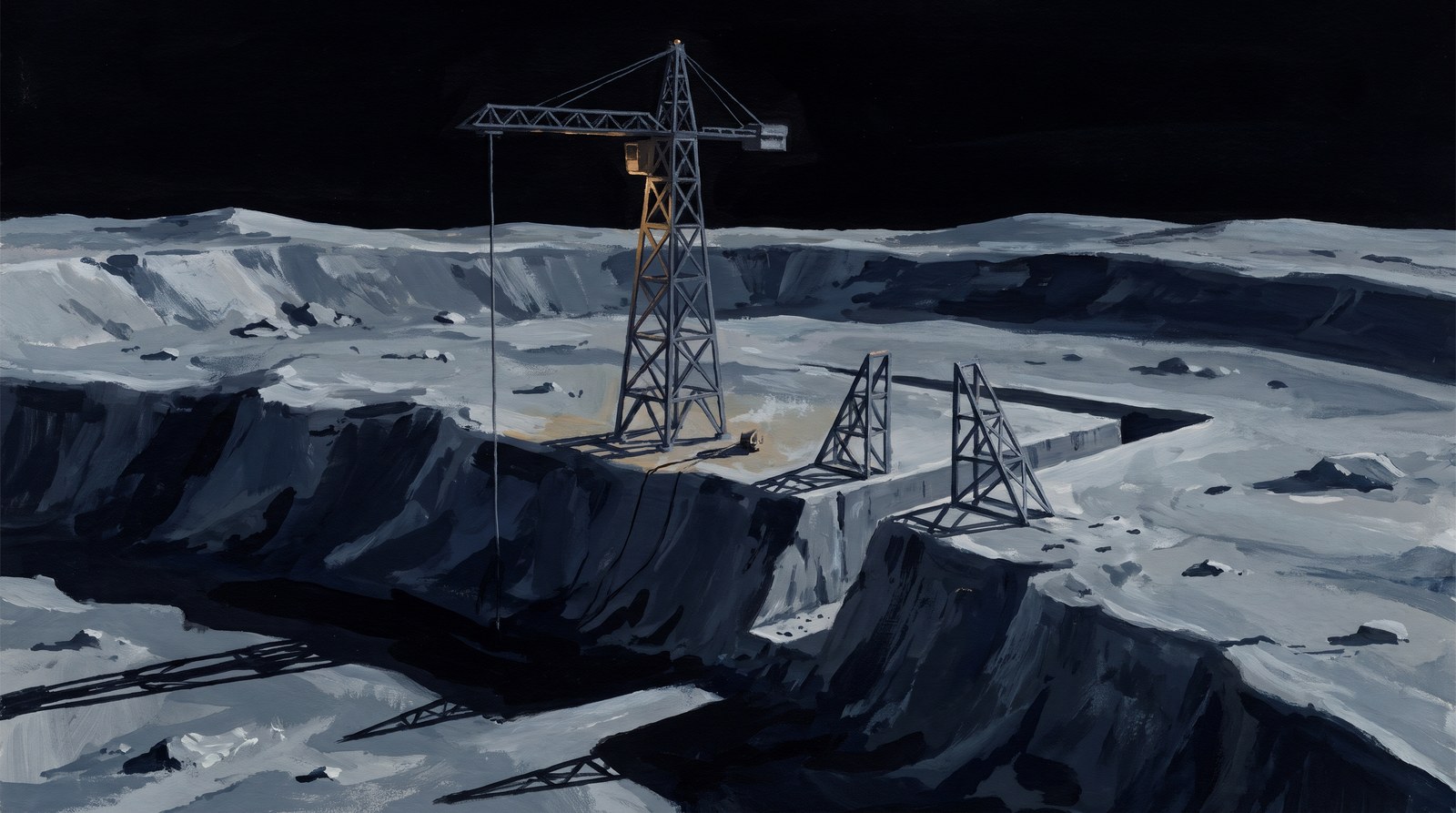
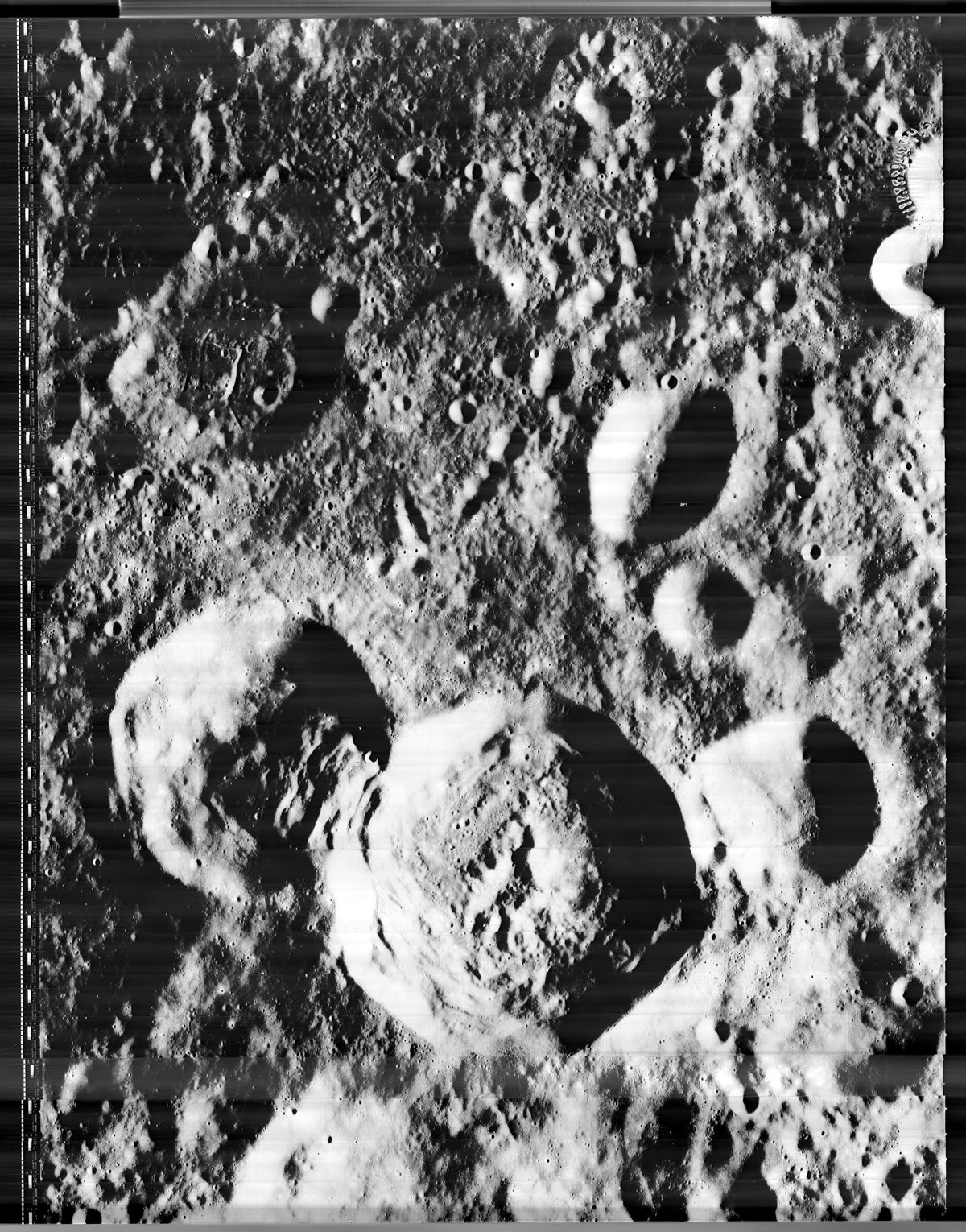
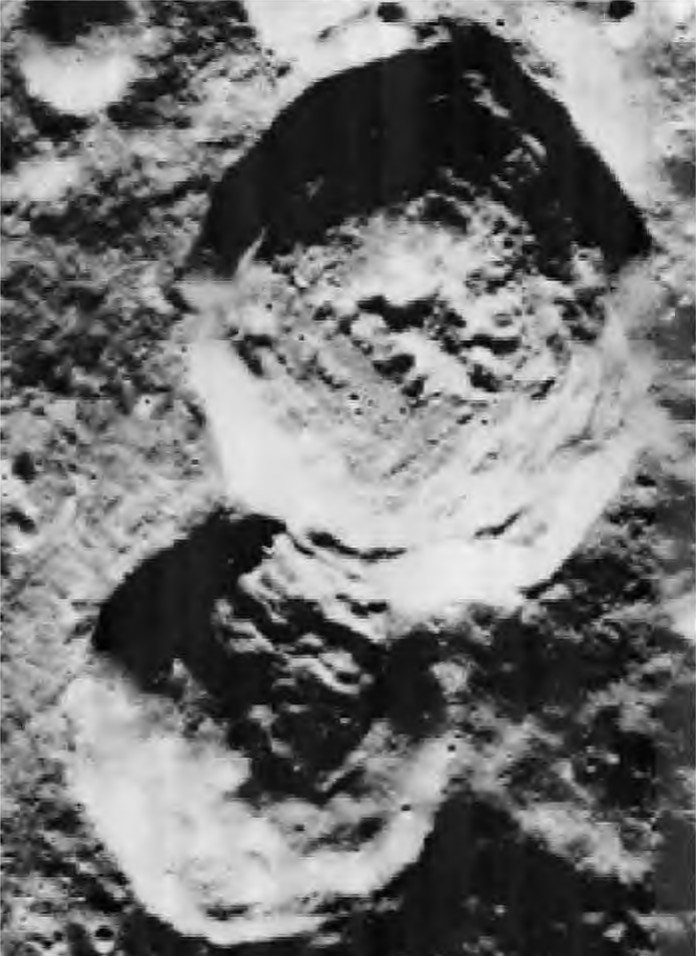
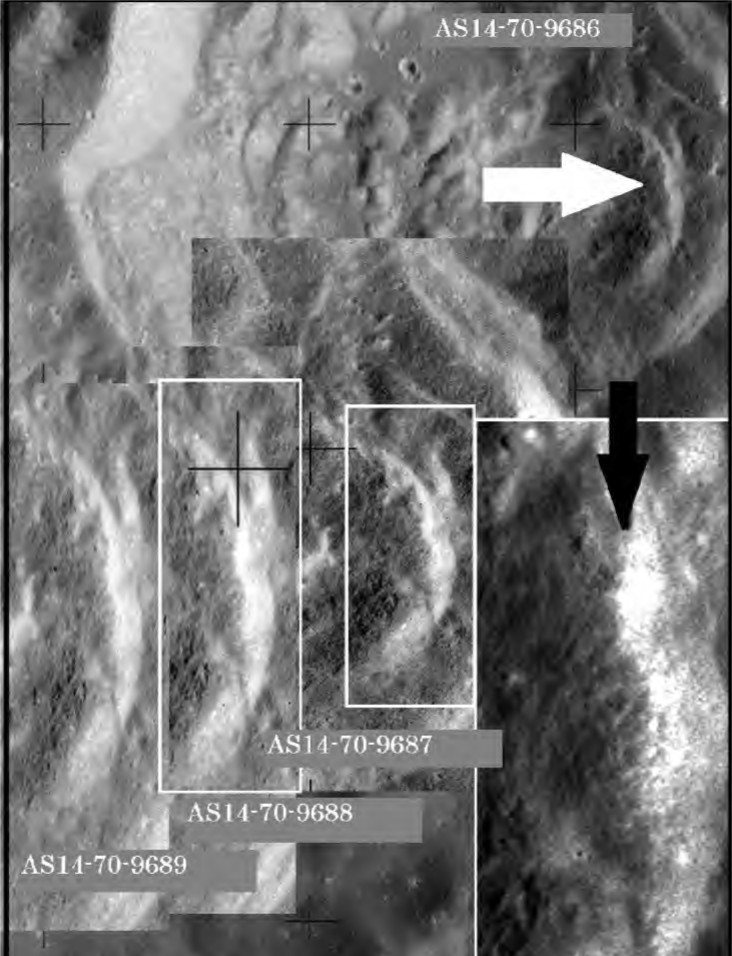
Leonard’s most famous claim. On a Lunar Orbiter I frame from 1966 he finds an eight-sided crater with something huge sitting at its base, about “two o’clock”: a Super Rig, with what looks like a boom and cables.
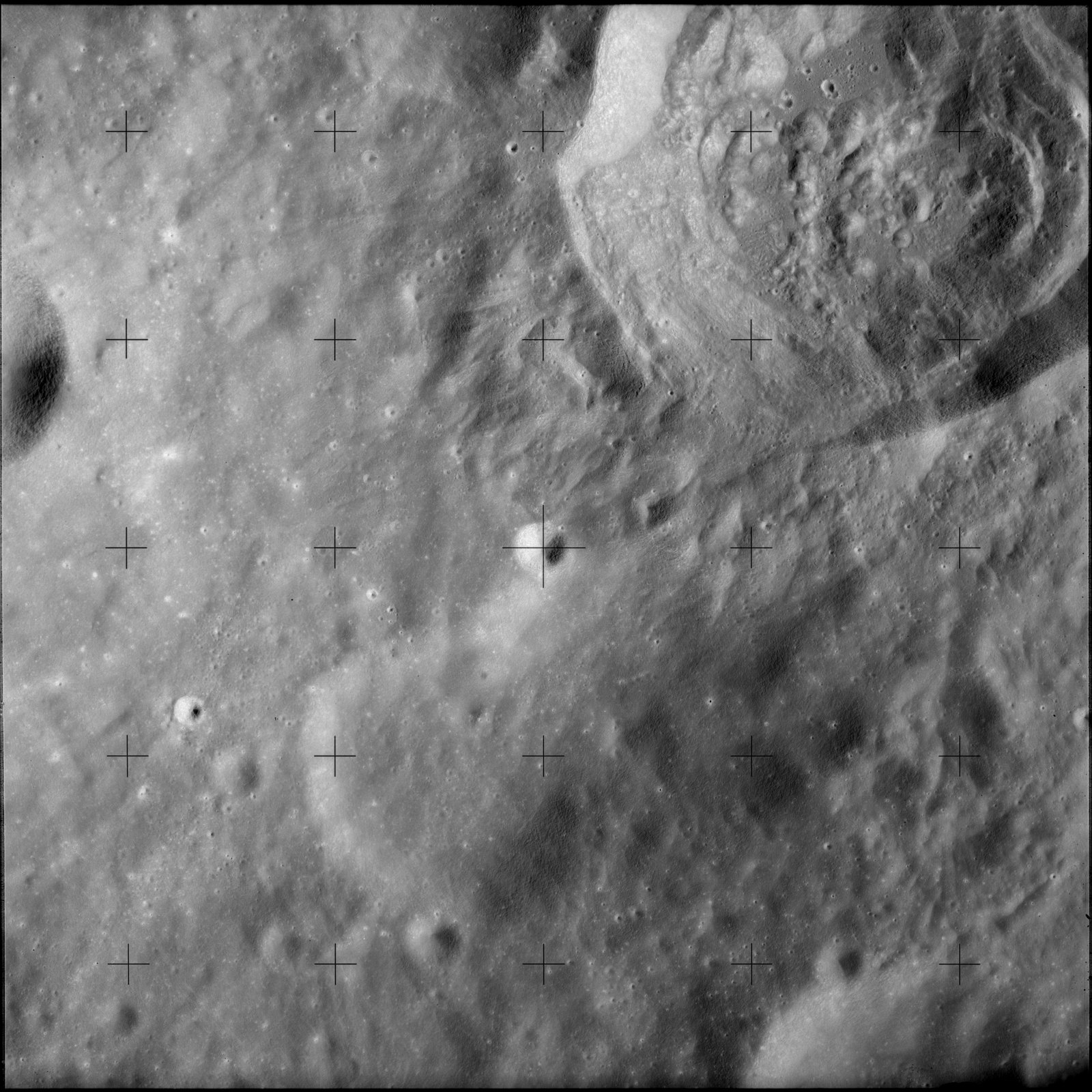
Five years later, he says, Apollo 14 photographed another one standing on a crater terrace, over a mile high. He imagines the crew’s reaction (“Annbell! [Or Barbara?]”) as a scene, not a quote.
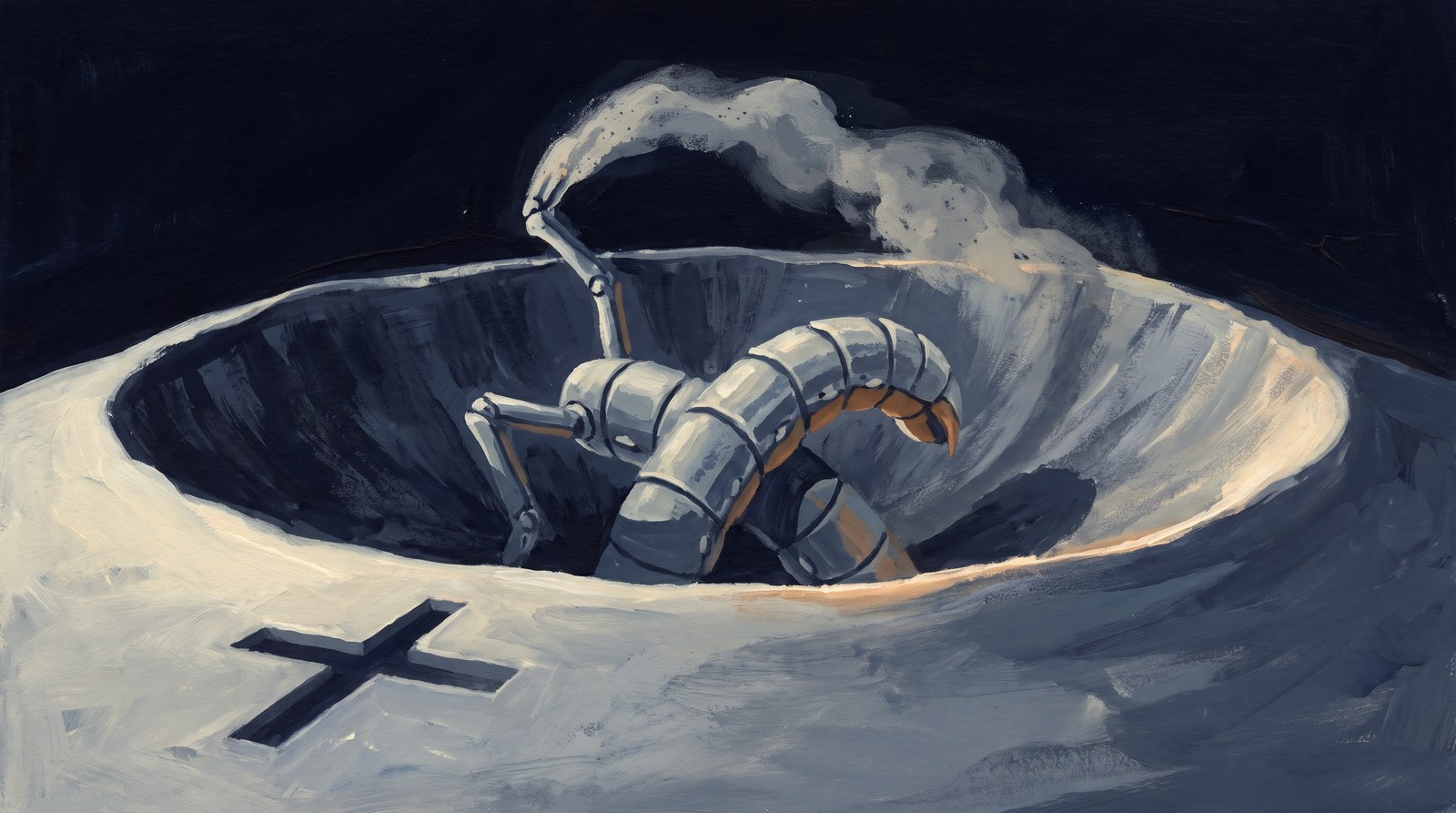
Smaller machines follow: X-drones, cross-shaped and often in pairs, that he says carve spiral cuts in crater walls (plate 7) and raise dust on the rim of King crater (plate 8); a T-scoop cutting away a central peak east of Mare Smythii (plate 5); and domes, tracks and a giant “screw” on the floor of Tycho (plate 9).
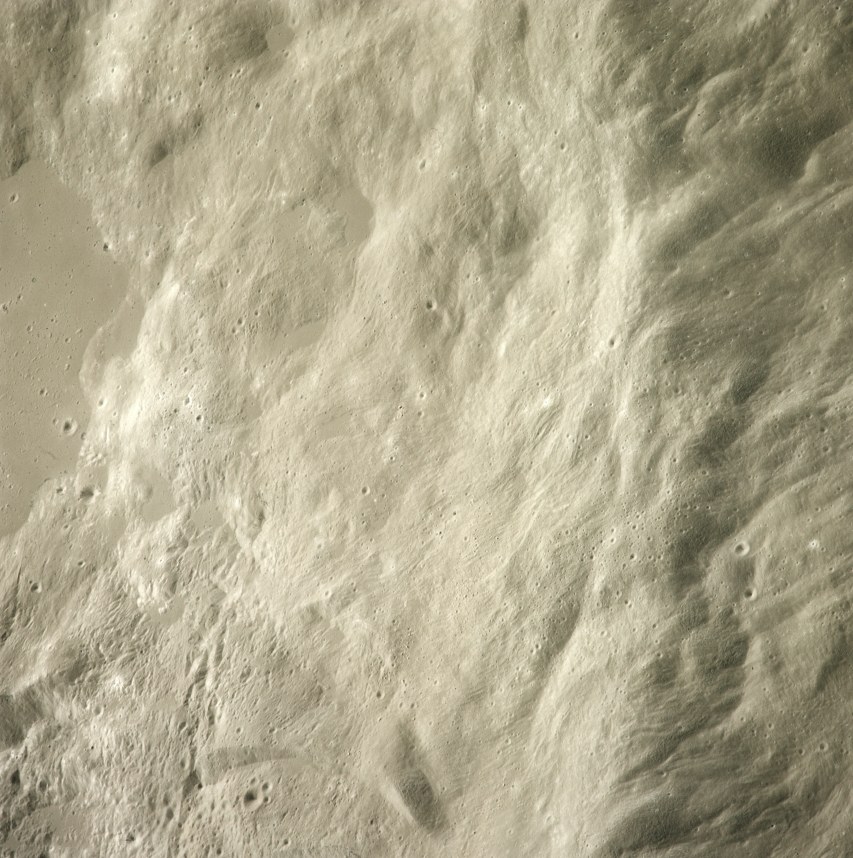
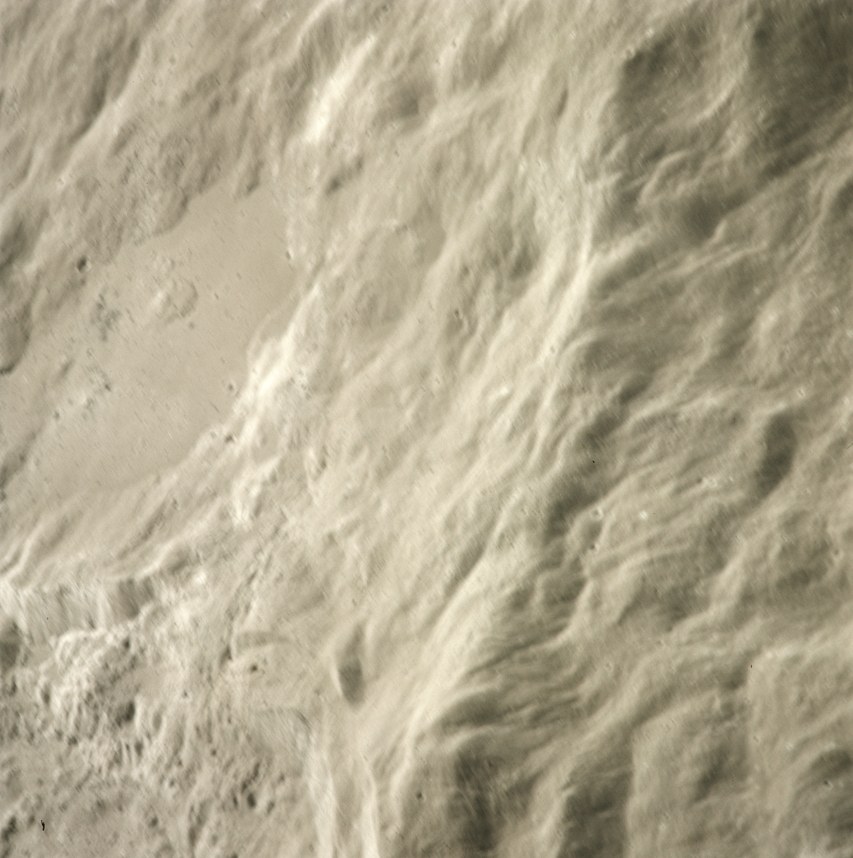
Lunar Orbiter I frame 136, the far-side shot behind Leonard’s plate 4. His octagonal crater is the large one at lower centre. NASA / Lunar and Planetary InstitutePlate 4 as printed in the book (NASA 66-H-1293). The Super Rig is at about two o’clock on the crater wall. NASA, as reproduced in Leonard’s bookApollo 14 frame AS14-70-9686, the first of the four frames his reissue gives for plate 6, the 1971 Super Rig. NASA / JSC, via Lunar and Planetary InstitutePlate 6 as printed in the book (NASA 71-H-781). NASA, as reproduced in Leonard’s book
On the record“Annabel” was Leonard’s imagined dialogue. He introduces the Apollo 14 lines with “Discovery of this huge object might have gone like this:”. Later books, including Swann’s Penetration, quote them as a real crew exchange. They are not in the mission transcripts.
Still openThe Super Rig frames are real and unretouched. What the shapes are is still argued: geologists see slumped crater walls in low sunlight.
5
Spraying out the craters
On Apollo 16 frames of the highlands near King crater, Leonard sees small craters with plumes of spray coming out of them, as if something inside is blowing material out. Two frames taken about two days apart show the spraying, he says, still going on.
He sees equal-armed crosses on the lips of craters being worked, which he reads as signs or markers. Near Kepler, on a Lunar Orbiter III frame, he sees a raised Latin cross (plate 13).
Leonard mails the chapter to Wittcomb. The reply: “a piece of the puzzle, a damned important piece, but that’s all.” Wittcomb’s guess is that They mine for raw materials to use on the Moon, not to ship home.
Leonard’s X-drones at work: a cross-shaped machine in a small crater, with a fan of spray rising. Illustration for uaptrail.comPlate 12: Apollo 16 frame AS16-120-19228, highlands near King crater. Leonard marks crosses, drones and “puff-like orbs” here. NASA / JSC, scan via Arizona State UniversityPlate 11: AS16-120-19226, his “small spraying crater”. NASA / JSC, scan via Arizona State UniversityPlate 13: Lunar Orbiter III frame 162, looking across to Kepler. Leonard’s Latin cross is near the crater. NASA / Lunar and Planetary Institute
6
Knocking down the ridges
Back at King crater, Leonard follows a ridge he puts at 3.6 miles high and sees it being cut down. He describes an X-drone with a detachable leg, objects like maces, a pipeline a fifth of a mile long, a “spare parts” stand and a power plate.
He mentions that a Goddard contact talked about security around the photos, and that the Apollo 17 science report found uranium and thorium readings he thinks point to mining.
Apollo 16 frame AS16-120-19265, one of the King crater sequence (plate 10). NASA / JSC, scan via Arizona State UniversityAS16-120-19263, the first frame of the same sequence. NASA / JSC, scan via Arizona State University
7
Service station in a crater?
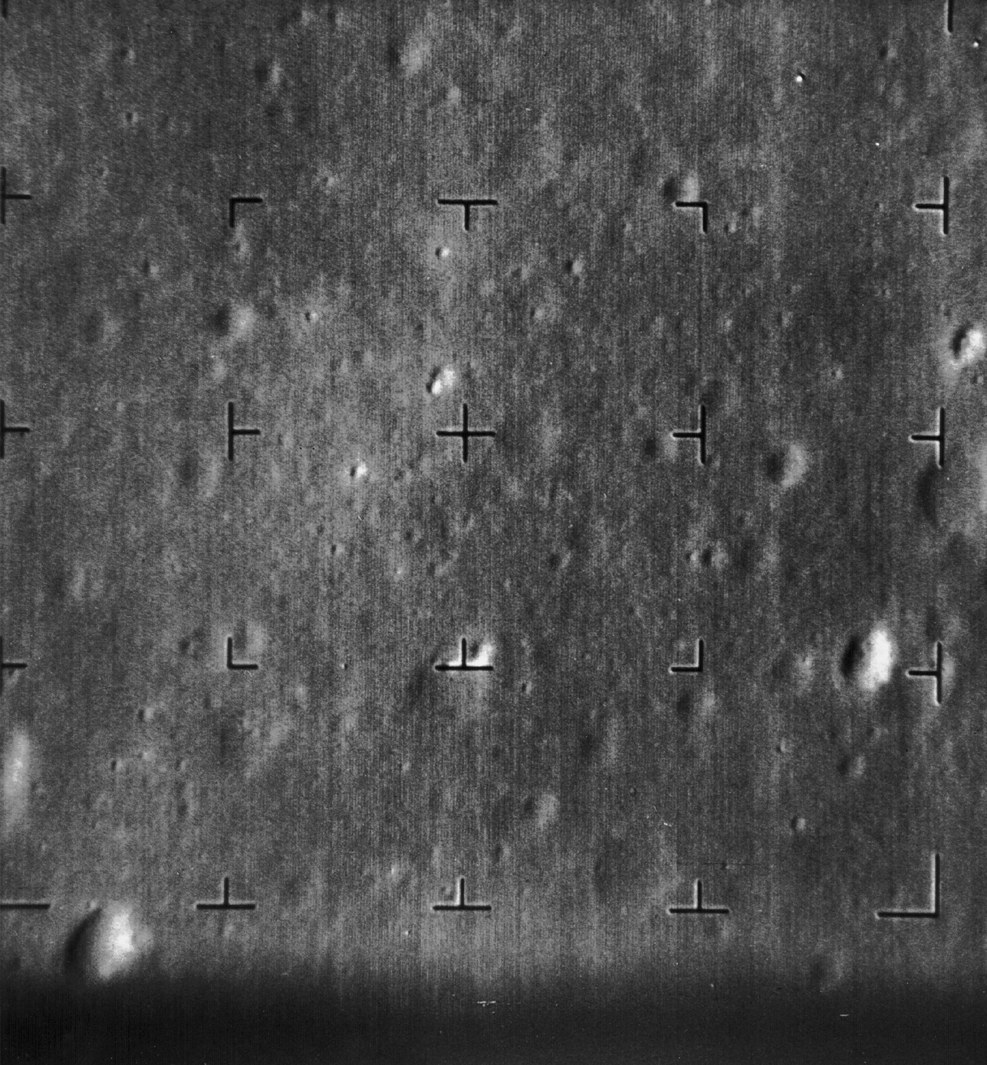
Ranger 7 crashed into the Moon on 31 July 1964, sending back pictures until impact. Leonard studies its last frames and a JPL mosaic labelled “rock mass 300 ft”. He sees something else: a station, with a glyph like a Y that he compares to old Moabite and Kharosthi letters.
He suggests Ranger was steered toward the spot on purpose, to get a close look.
Leonard’s “service station”: a crater floor with a structure and a Y-shaped mark, seen from a falling probe. Illustration for uaptrail.comRanger 7’s last camera-A frame (A199), taken about 6 km above the surface on 31 July 1964. NASA / JPL, NSSDCA
Worth knowingRanger 7 had no way to steer itself onto a target in its last minutes. Its aim was fixed by a single course correction on the way out, and it came down in Mare Nubium, later renamed Mare Cognitum, “the sea that has become known”.
8
Things that move around
Leonard reads the Apollo 17 science report: 34 boulder tracks were measured at the landing site, but a boulder sat at the end of only 8 of them. What made the others?
Leonard shows two trails in Vitello crater, one of which, he says, rolled uphill and out of the crater (plate 14). In Sabine D two objects roll in opposite directions (plate 16). In Procellarum a vehicle sits in a rayed crater (plate 17).
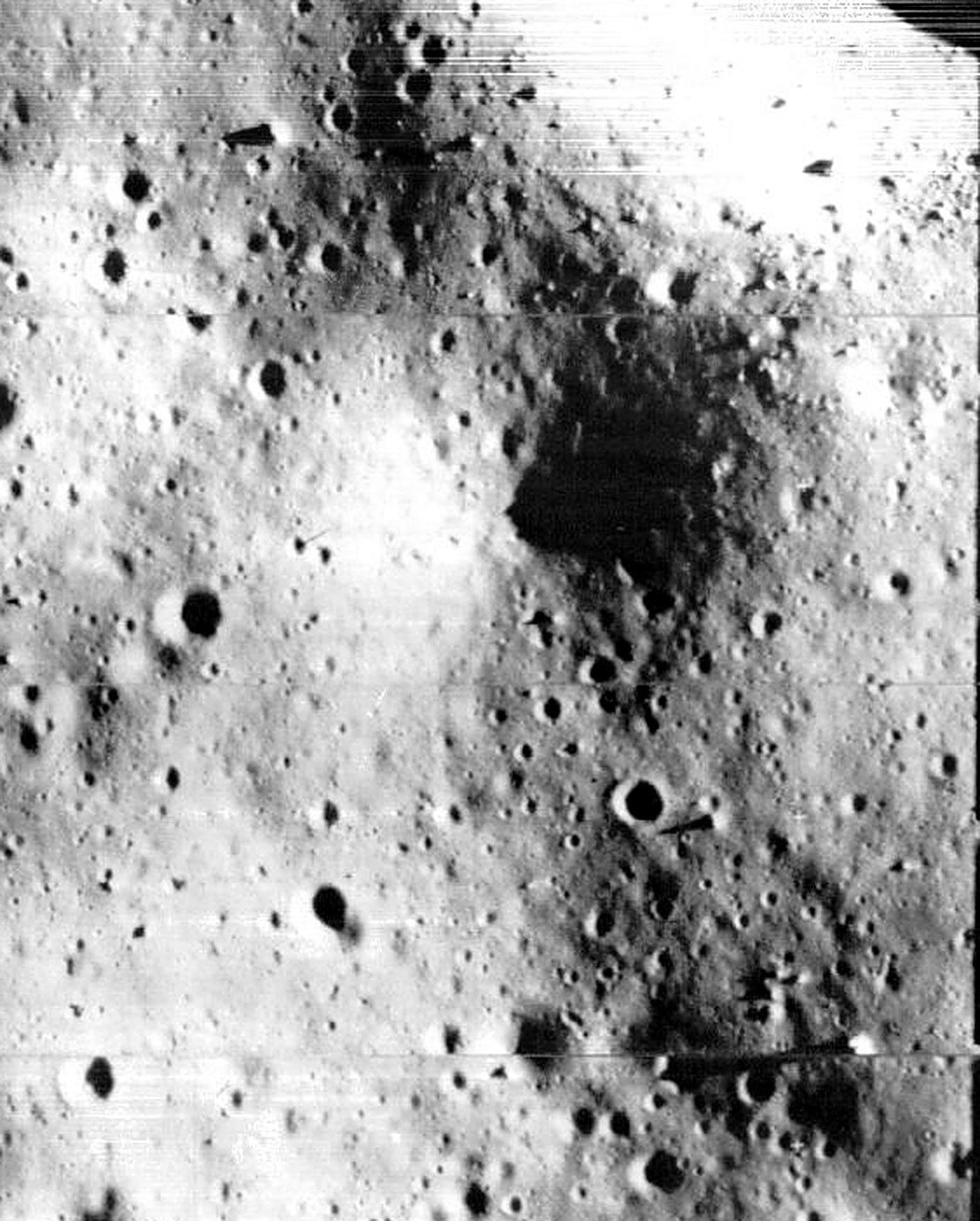
He also brings in the strangest group: tall pointed objects with two bumps, casting long shadows, on a Lunar Orbiter II frame (plate 15). The Soviet magazine Tekhnika Molodezhi had put them on a cover. He quotes the Apollo 15 crew talking about “white things” flying by.
The “Blair cuspids”: Lunar Orbiter II frame 61, enlarged. The long spike-shaped shadows at the top were cast by objects Leonard counts among his two-bumped shapes (plates 15 and 21). NASA / Lunar and Planetary Institute, enlarged for uaptrail.com
On the recordThe “Blair cuspids” were named after William Blair of Boeing, who in 1966 said the shadows looked like an arranged pattern. Lunar Orbiter II took the frame in November 1966. A natural explanation (rocks on a slope in low sun) was proposed, not demonstrated. NASA’s LRO has since re-imaged the area.
Part Three
Signs in light, dust and ground
Leonard turns from machines to traces: rays, glyphs, stitches, clouds and lights.
9
Rays
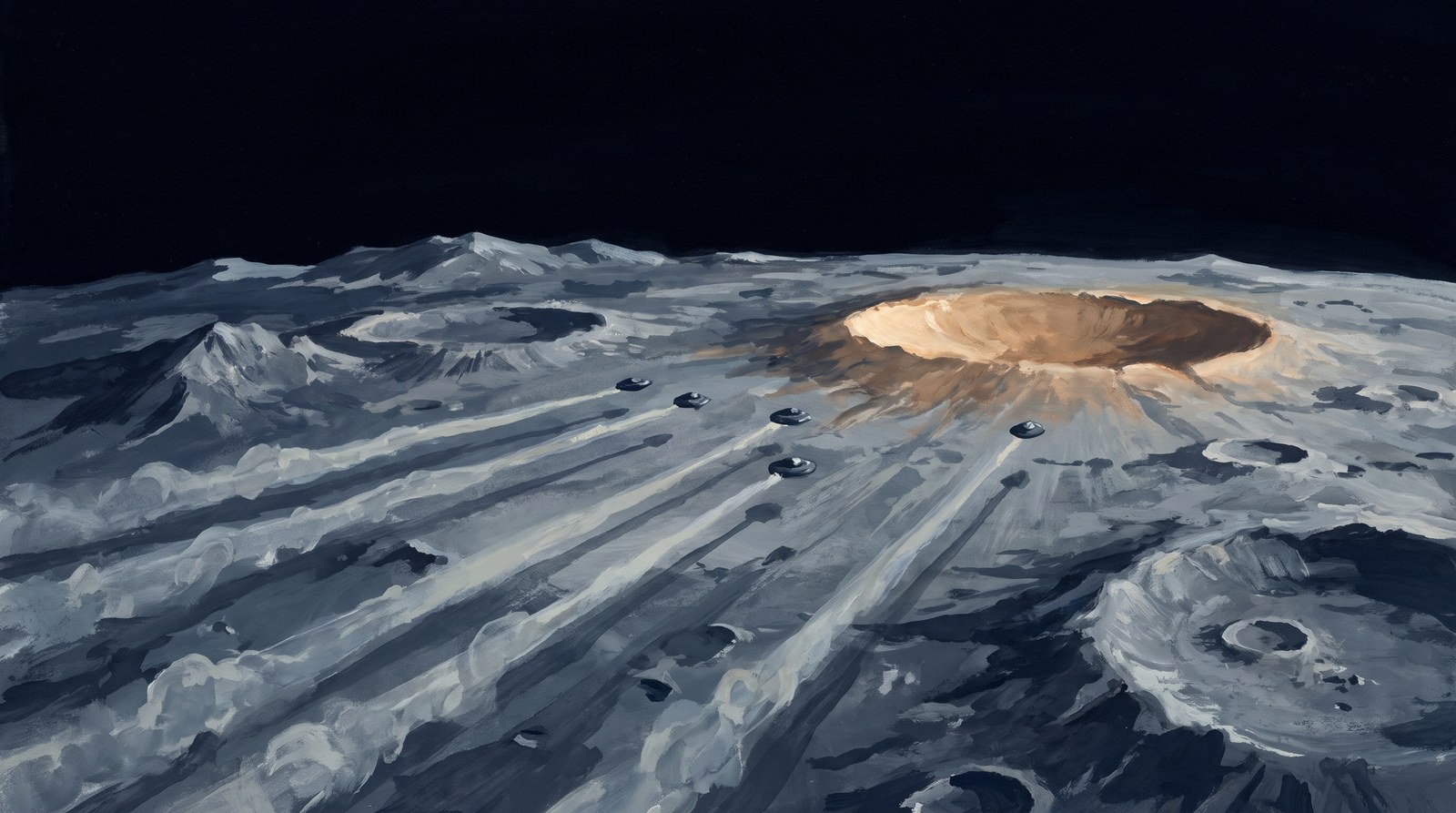
The bright streaks spreading from craters like Tycho run for hundreds of miles. Leonard lists ten of their properties and argues they don’t fit debris splashed out by impacts: some craters have a single ray, some rays start from the side of a crater rather than its centre, and overlapping systems from Copernicus, Kepler and Aristarchus never erase each other.
His idea is that they are dust shaken off the underbellies of craft that come and go, or the output of the spraying craters.
Leonard’s explanation for the rays: a craft lifting from a crater and shedding pale dust behind it. Illustration for uaptrail.com
10
What’s going on in Tycho?
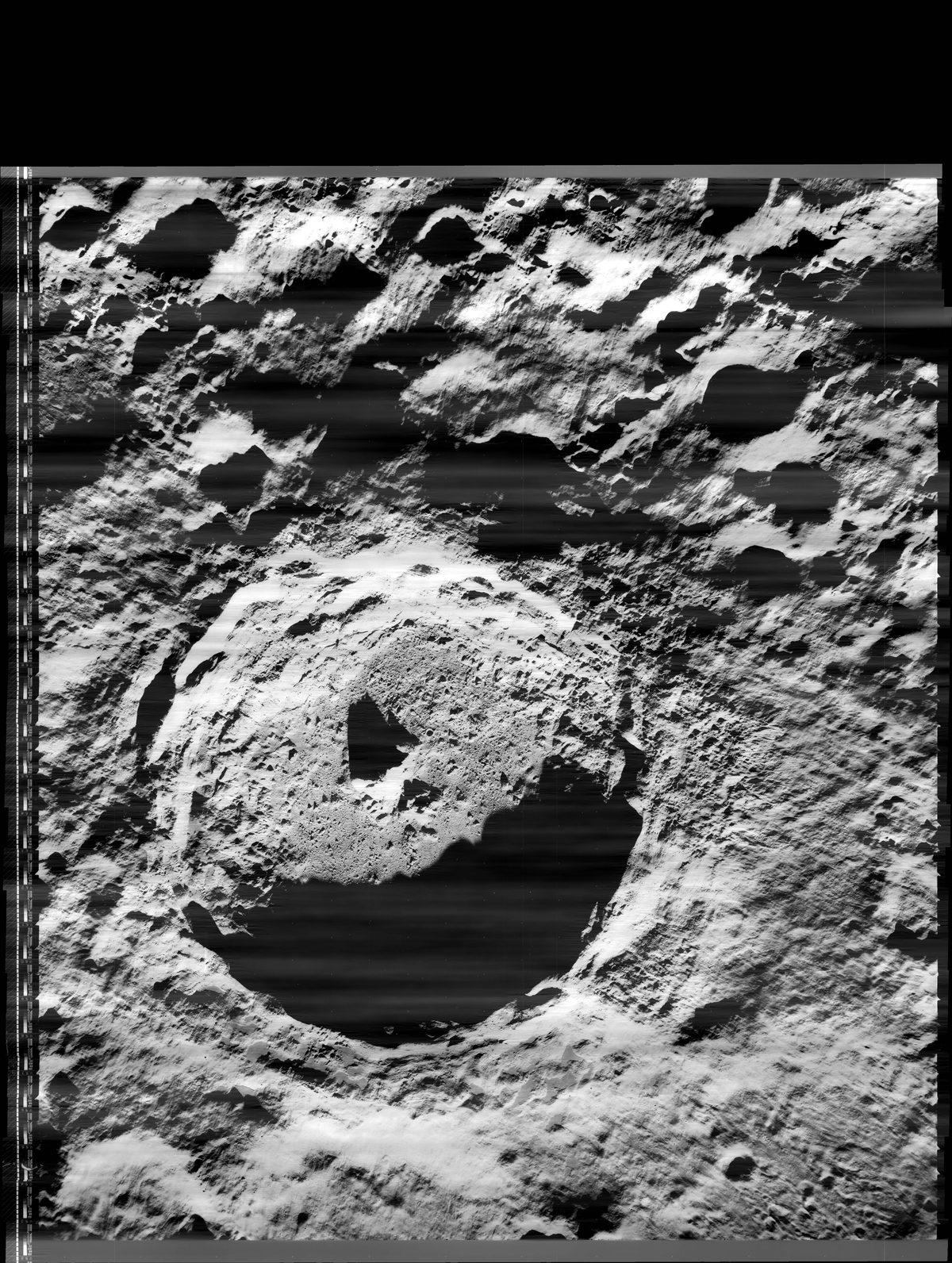
Leonard was guiding a club of nine children, the Young Astronomers’ League of Rockville, Maryland. On a rainy night he handed each of them the 1967 Lunar Orbiter V photo of Tycho and asked them to write to NASA about it. Their letter to Administrator James Fletcher, dated 20 October 1973, says there are “things on the ground built by some pretty good brains” and asks why the public was never told.
Then he tours the crater floor: an octagonal glyph, a covered crater, a “power source plate with knobs and cord”, and the screw he first noticed in plate 9.
The young astronomers bent over their prints of Tycho. Illustration for uaptrail.comLunar Orbiter V frame 125, Tycho: the source of Leonard’s plates 9 and 19. NASA / Lunar and Planetary Institute
Still openWe found no trace of the club or its letter outside this book.
11
Gas jets
North of Tycho, in a patch about seven miles wide, Leonard sees nozzles venting gas. Plate 20 shows his “gas spray”. He ties it to the lights and clouds that observers have reported for centuries.
12
Stitching up the Moon
Wittcomb once said the Moon has “giant tailors”. Leonard finds what he means: lines of regular marks across craters in Lubiniezky and Tycho, like stitches pulling the ground together.
He tries the idea on El-Baz, then corners Harrison Schmitt after a talk at the National Aviation Club. Did he see anything extraordinary? “Not at all.” Leonard hears it as a rehearsed line and decides the silence is military security.
The “stitches”: rows of regular marks closing a seam across a crater floor. Illustration for uaptrail.com
13
Clouds and mists
A physicist at the Bureau of Standards tells him clouds can’t hover over the Moon. Leonard answers with the history of transient lunar phenomena: glows, mists and colour changes recorded by trained astronomers, including the Soviet Nikolai Kozyrev’s 1958 spectrum of a gas release in Alphonsus and Dinsmore Alter’s photos of the same crater.
On the recordNASA’s own 1968 catalogue, Technical Report R-277, lists 579 such reports from 1540 to 1967.
14
Lights
Flashes seen by astronauts: Schmitt saw one north of Grimaldi on Apollo 17, and Ron Evans another. Leonard quotes El-Baz, via the writer Joseph Goodavage, calling them “not natural”.
He adds the long record from Earth: Plato crater alone had about 1,600 reported lights by 1871, and Winifred Cameron catalogued more than 900 lunar events. In 1972 NASA asked amateur astronomers to watch for lights during Apollo missions.
He also quotes Ken Mattingly on Apollo 16 seeing a flashing light and saying “think it’s Annbell”, which he takes as a code word for something to look out for.
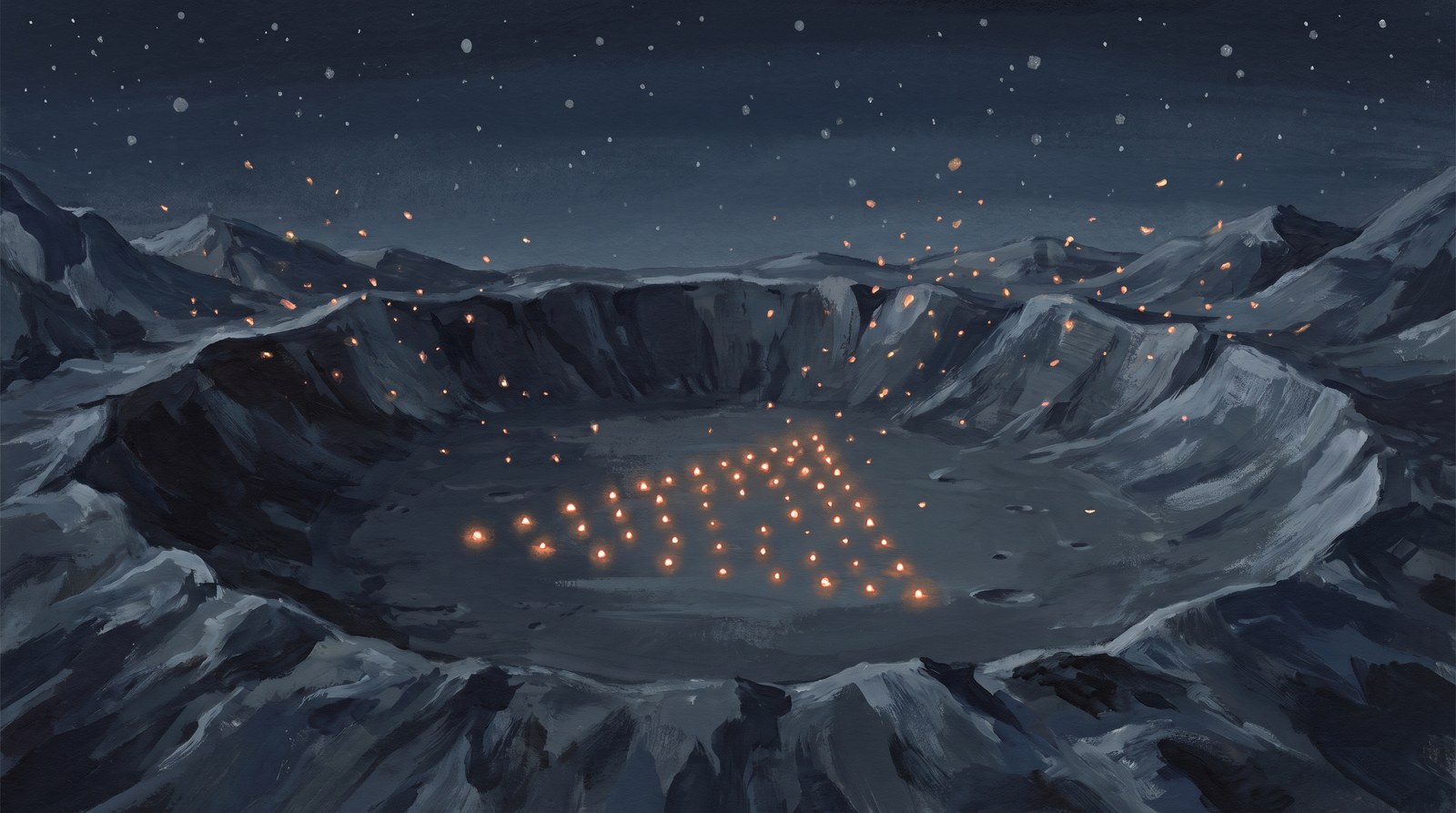
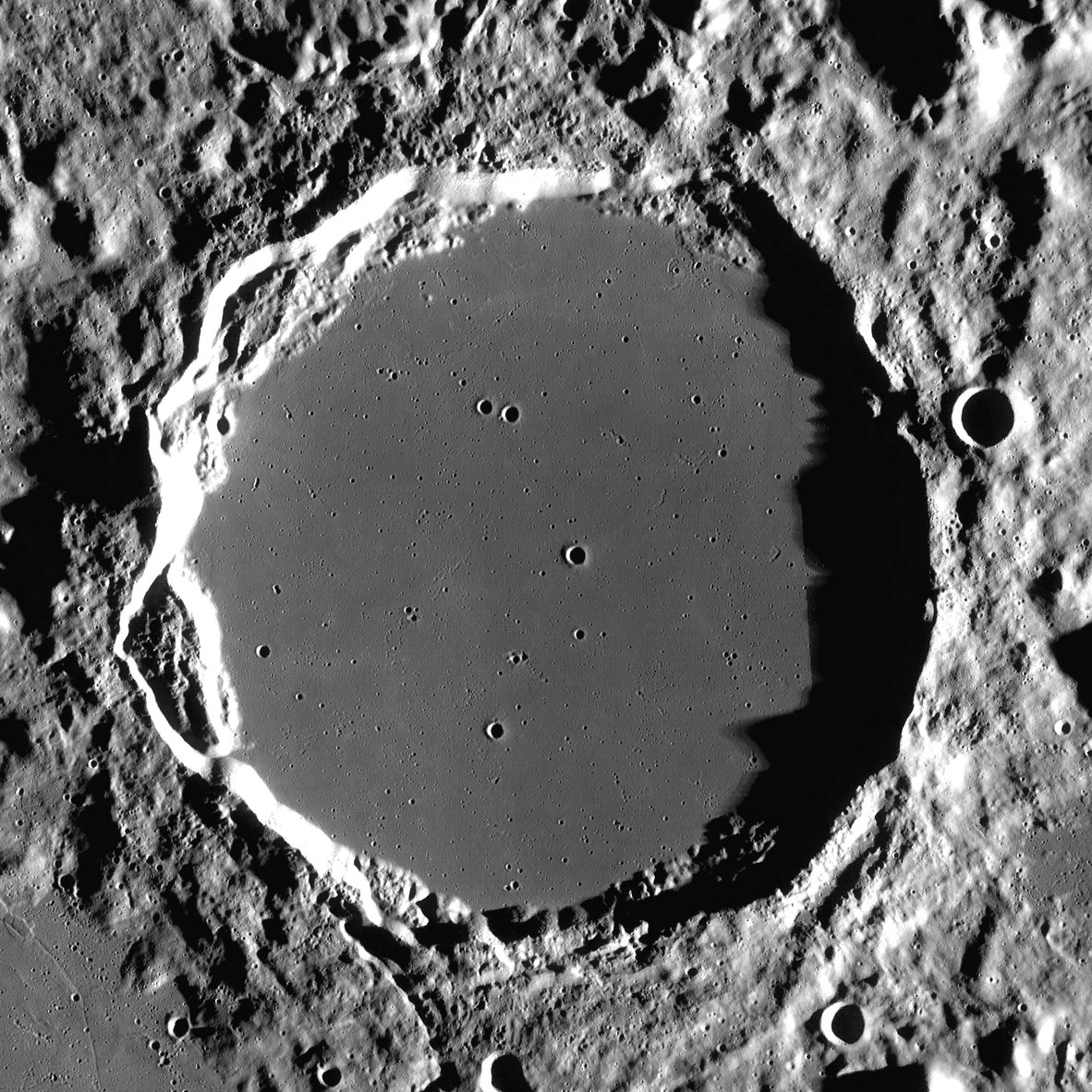
Lights on the floor of Plato, as observers described them in the 1800s. Illustration for uaptrail.comPlato crater, about 60 miles across, photographed by NASA’s Lunar Reconnaissance Orbiter. NASA / GSFC / Arizona State University (LRO)
On the recordThe flashes are real: Mattingly on Apollo 16 and Schmitt on Apollo 17 reported them in flight. See Flashes on the Moon.
Worth knowingWe could not find Mattingly’s “Annbell” line in the Apollo 16 transcripts, and the El-Baz “not natural” quote has no primary source beyond Goodavage.
15
Markings, insignia, high-rise signals
Glyphs and runes, towers and spires, a cable across Petavius, and an obelisk whose shadow shows a horizontal bar on top (plate 21, the same Blair cuspids frame).
He uses radio-tower maths to ask how tall a structure would need to be to signal over the Moon’s short horizon, and goes back to O’Neill’s bridges in Crisium.
On the recordTowers and spires on Lunar Orbiter frames are still discussed today; see the Shard and the Tower.
16
Assorted oddities
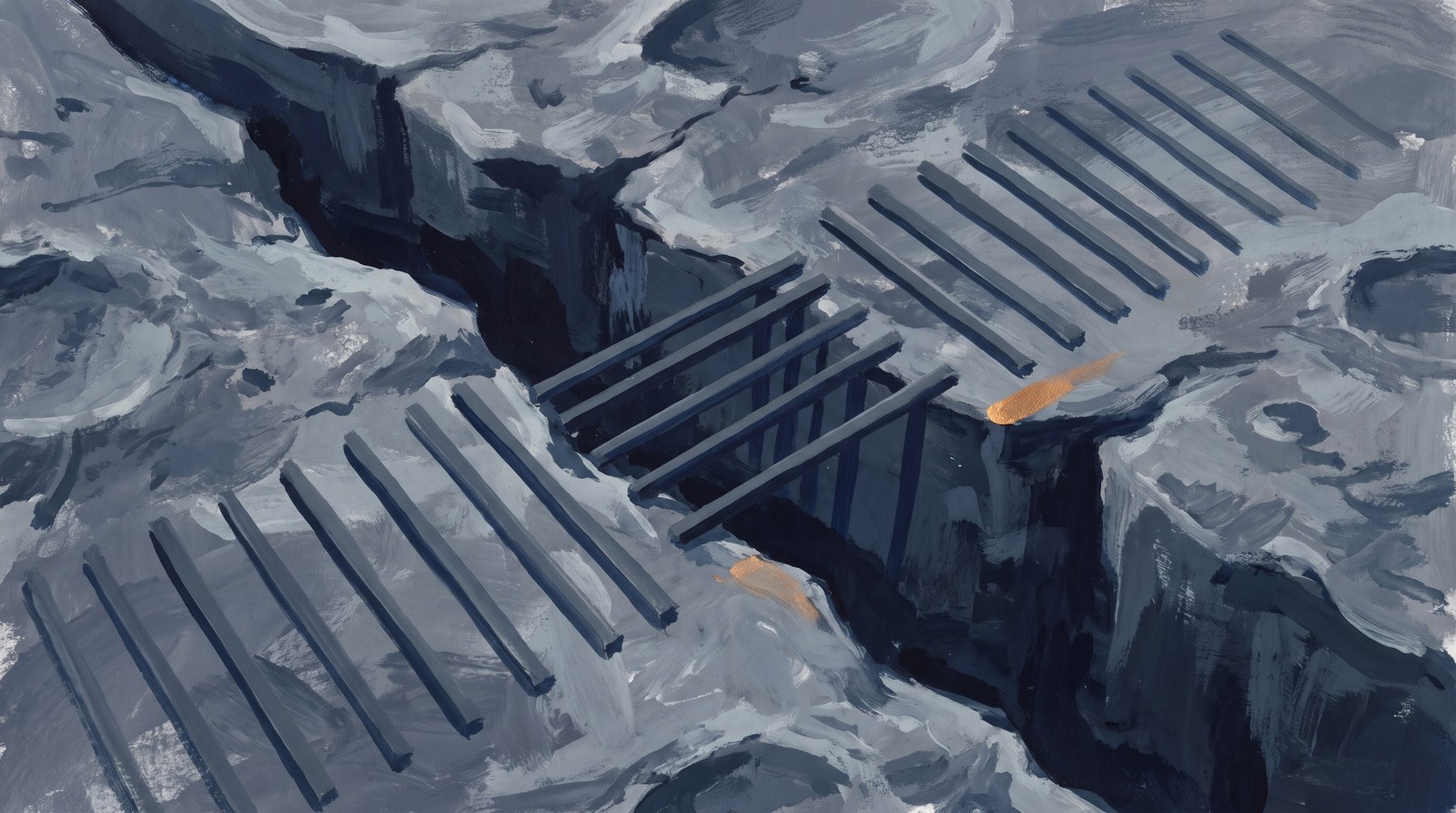
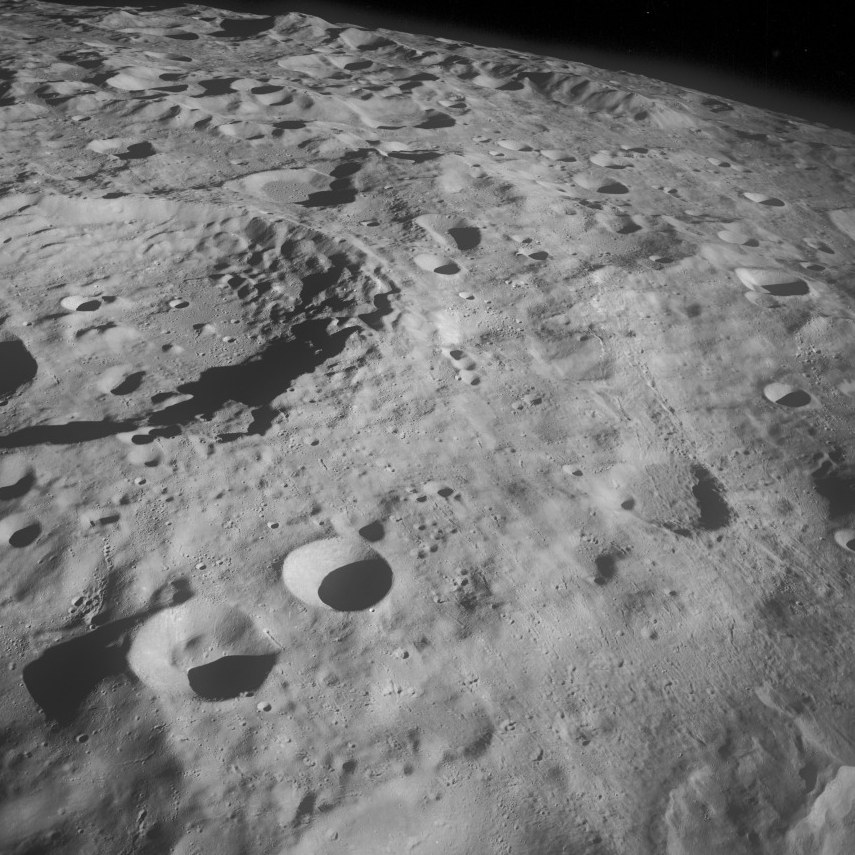
A grab-bag: a “rope ladder” of tread marks down a far-side crater wall seen by Apollo 8 (plate 22); white light pouring over the rim of Lobachevsky (plate 23); “control wheels” in craterlets (plates 24 and 27); a machine-tooled object (plate 25); a diamond-shaped opening near where Surveyor 1 landed (plate 28); walls and an arch in Orientale (plate 29).
Near Triesnecker he sees a seven-by-four-mile covering with regular ribs (plate 31). In the Alpine Valley he finds domes on platforms (plate 35). He also points to pipes bent at right angles, “T-bar plumbing”, in craters on the maria (plates 32 to 34).
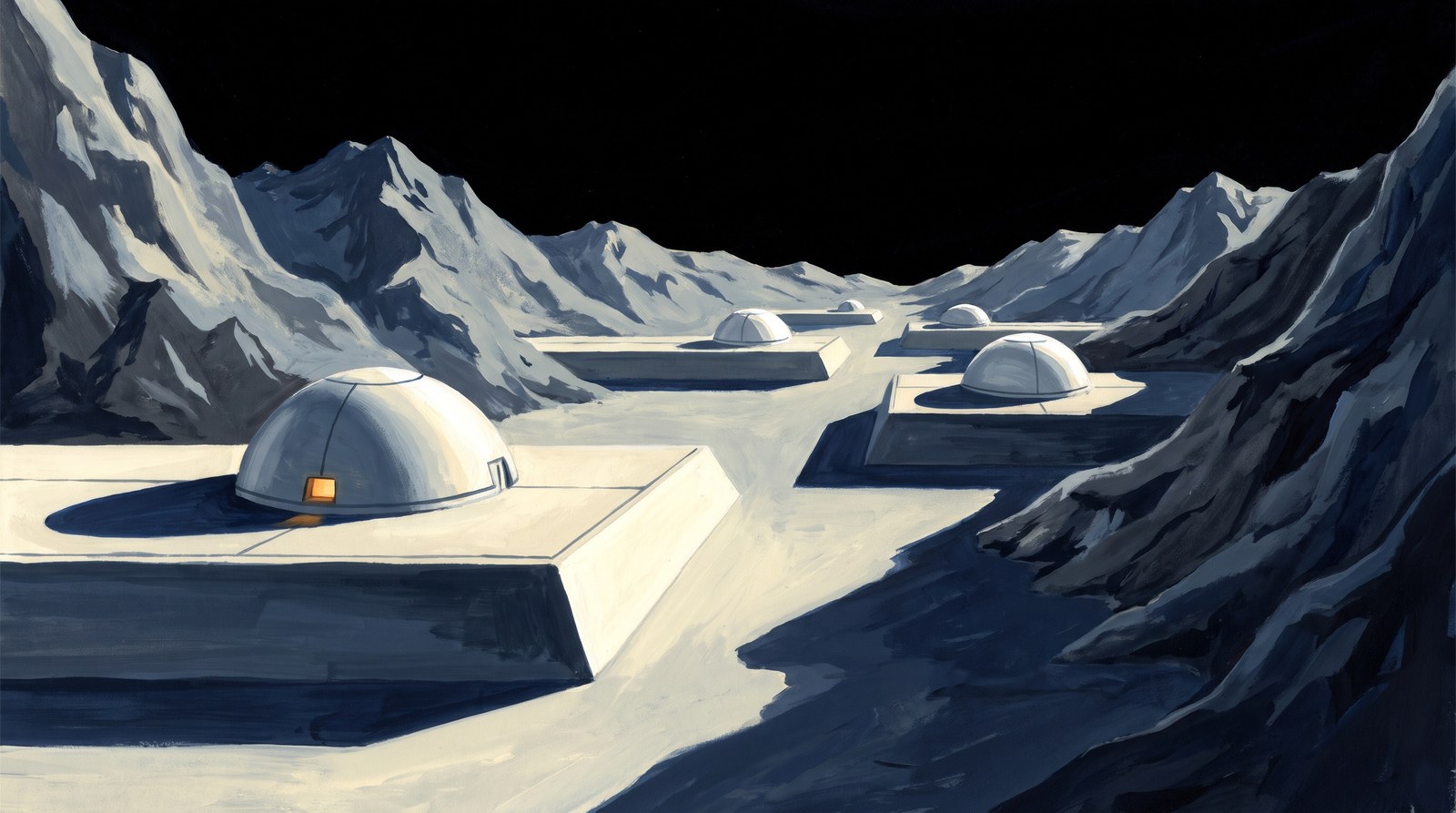
Plate 22: Apollo 8 frame AS8-13-2244, far side, looking toward the horizon. NASA / JSC, scan via Arizona State UniversityPlate 23: Apollo 16 mapping-camera frame AS16-M-0758, Lobachevsky. NASA / JSC, scan via Arizona State UniversityPlate 31: Apollo 10 frame AS10-32-4819, Triesnecker crater and its rilles. NASA / JSC, scan via Arizona State UniversityWhat Leonard sees in the Alpine Valley: domes standing on flat platforms. Illustration for uaptrail.comPlate 35: Lunar Orbiter IV frame 115, the Alpine Valley. NASA / Lunar and Planetary Institute
On the recordSurveyor 1 landed on 2 June 1966, the first US soft landing on the Moon.
Part Four
Who, and why
The last two chapters step back from the photographs and ask what kind of neighbours we have.
17
When is a Moon not a Moon?
Astronomers have reported moons that later vanished: a moon of Venus seen from 1672 to 1764, the planet Vulcan. Leonard reminds us that Mars’s moons were only found in 1877. Moons, he suggests, can come and go.
He returns to Asimov, who was puzzled that our Moon orbits so far from Earth for its size. Asimov’s own words, in capitals: “WHAT IN BLAZES IS OUR OWN MOON DOING WAY OUT THERE?”
18
Pulling it all together
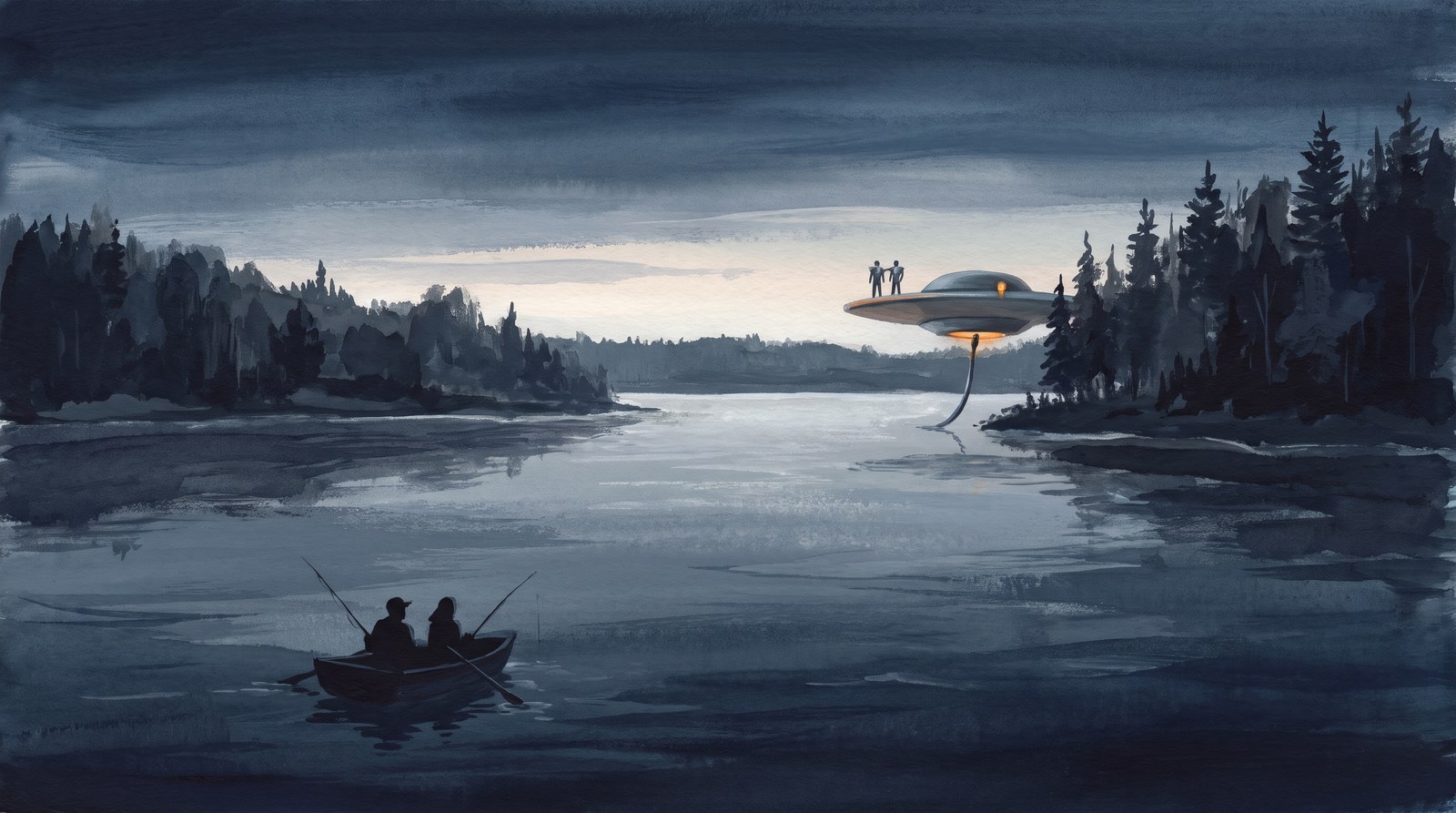
Leonard offers nine possibilities, not one answer. Several races may share the Moon. They may be mining it. The Moon may have been moved here after a catastrophe. We may be part of a breeding experiment. They may be living off Earth, even taking water: he cites a 1950 report in the Steep Rock Echo (Ontario) of a couple on a fishing trip who watched small occupants of a craft take on water through a hose.
Perhaps They look down on us. Perhaps They are mechanical. And perhaps the Apollo programme itself happened because the Moon is occupied, with the US and the USSR quietly dividing up the work: he finds no overlap between their payloads.
He ends on a quotation NASA itself chose to open the Apollo 17 science report, from Machiavelli: nothing is more difficult than to “take the lead in the introduction of a new order of things”.
In an epilogue, Wittcomb tells him of a quiet meeting in England in spring 1975 about extraterrestrials, with a Colorado physicist who had worked on the Moon programme. “It belongs to Them.”
The 1950 Steep Rock story Leonard cites: a craft on a Canadian lake, drawing water through a hose. Illustration for uaptrail.com
On the recordThe Machiavelli quote does open the introduction to NASA’s Apollo 17 Preliminary Science Report (NASA SP-330, 1973).
Still openThe physicist is named in the book as Joachim Kuettner, a real atmospheric scientist in Boulder. The meeting rests on Wittcomb’s word alone.
The believer’s reading
What if it’s true?
If Leonard is right, the Moon has been a work site all along, and the machines are big enough to see in 1960s photographs. Anyone who looked closely at NASA’s prints had the evidence in hand.
If the Apollo programme was partly a look at who is there, the abrupt end of crewed Moon flights in 1972, and the half-century gap before sharper cameras went back, read very differently. See the high-resolution Moon that came late.
If the Moon is occupied, it would explain why so many astronauts, scientists and observers report lights and flashes there, and why the agencies stay quiet.
On the record
Every plate is a real NASA frame, and Leonard gave the numbers so readers could check. Most can be found today in the Lunar and Planetary Institute and Arizona State University archives.
Astronauts reported flashes on the Moon on Apollo 16 and 17 (Flashes on the Moon).
Transient lunar phenomena are a recognised research subject. NASA catalogued 579 reports in 1968 and asked amateurs to watch during Apollo.
The Apollo seismometers found the Moon rings for a long time when struck, and records frequent moonquakes.
The Machiavelli epigraph does open NASA’s Apollo 17 Preliminary Science Report.
Still open
Leonard’s readings of the shapes (rigs, drones, sprays, stitches) are his own. No one else has confirmed a machine on any of these frames, and newer, sharper images of the same places, such as from LRO, have not been shown to support them.
His key sources are pseudonyms (Wittcomb, the NASA contacts) or secondhand (El-Baz via Goodavage). The Young Astronomers’ letter and the 1975 England meeting can’t be checked.
The Apollo 14 “Annabel” dialogue is his reconstruction. The Apollo 16 “Annbell” line is not in the transcripts we checked.
Leonard’s identity: the Encyclopedia of Science Fiction says the author was George Hughes Cooper Jr. (1921 to 2018), a public health administrator, and that he later disowned the book. It gives no source for that.
Sources
George H. Leonard, Somebody Else Is on the Moon (New York: David McKay, 1976).
George H. Leonard, Somebody Else Is on the Moon, reprint with plates and NASA cross-references (Delhi: Kalpaz, 2017).
Images: NASA (JSC, JPL, GSFC), Lunar and Planetary Institute, Arizona State University scans, NSSDCA, as credited. Paintings are illustrations for uaptrail.com.