Radar beneath the Khafre pyramid
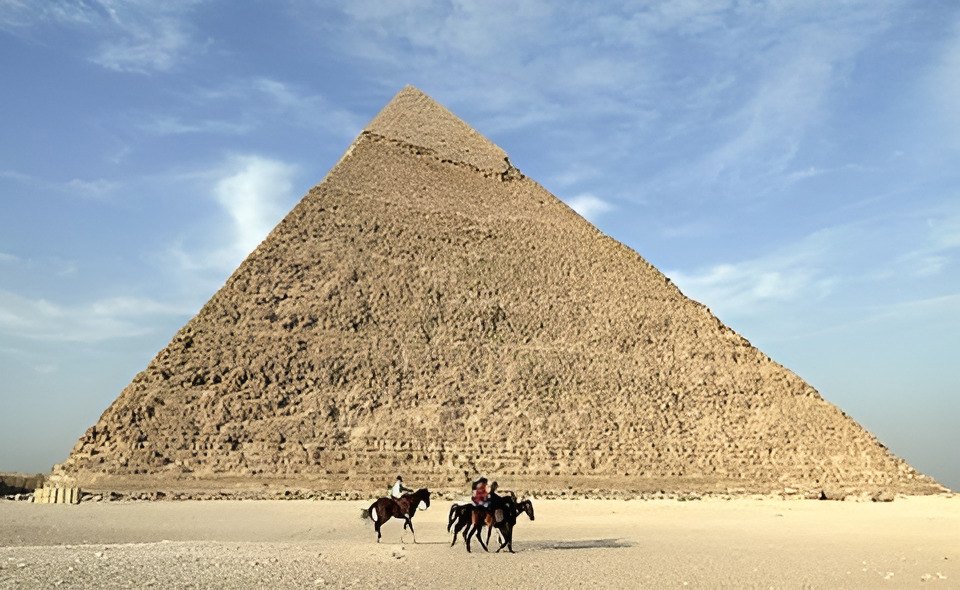
At a press event in Bologna, Italian researchers Corrado Malanga, Filippo Biondi and Armando Mei presented satellite radar (SAR) tomography of the Pyramid of Khafre. They said it showed eight vertical cylindrical shafts wrapped in spiral pathways, plunging about 650 meters below the pyramid into two enormous cube-shaped chambers. Supporters link this to legends of the Halls of Amenti and a lost civilization far older than dynastic Egypt. Biondi later discussed the scans with Jesse Michels.
How plausible · Very low
Real satellite data, but the processing is one team's, its only peer-reviewed Giza paper was retracted, two reproductions were negative, and specialists say the method can't see that deep.
- ●○Access The team used real SAR data from several satellites.
- ●○Consistent over time Same claims since March 2025.
- ●○Character record Academic engineers, with a retraction on record.
- −Contradicted by an insider Conyers, Parcak and Hawass reject it (half weight; the team disputes).
- −Details proved false Khufu paper retracted Aug 2026; two independent reproductions found nothing.
- −Commercial motive Announced at press events; books and talks around it.
- −Lone source, no corroboration Only Biondi's processing; no company confirmed the results.
Plausibility weighs how well an account fits where secrecy hides the documents by design, so missing records never count against it. Strength measures what is documented. Assessed 2026-10-23.
On the record
- The Bologna presentation and published images.
- Biondi first applied his SAR method to the Great Pyramid in 2022 (Remote Sensing 14:5231). That paper was retracted by MDPI on 10 Aug 2026 for 'serious methodological flaws and statistical errors'; the authors formally disagree and say they were never told the specific errors.Mars 1 million BCHidden rooms behind Tutankhamun's tomb (KV62)?Gunung Padang: a buried pyramid 25,000 years old?Muons under the Pyramid of the Sun
- Biondi's method grows out of his SAR micro-motion work on the Mosul Dam (IEEE JSTARS 2020), validated against GNSS, and a 2022 Vesuvius paper that is still published.Hidden rooms behind Tutankhamun's tomb (KV62)?Gunung Padang: a buried pyramid 25,000 years old?Muons under the Pyramid of the Sun
Claims
Where
In The picture
Similar cases · sharing people, threads, topics or era
Connected cases
People and organizations
Threads · click one to see it on the board
Sources
- National Geographic: Is there a secret city under the pyramids?
- Full technical presentation on the Giza underground structures
- Khafre SAR scan, March 2025: the structures beneath the pyramids
- Khafre Project SAR scan below the Great Sphinx
- Retraction Watch: retraction of the Great Pyramid corridors paper (31 Aug 2026)
- MDPI retraction notice, Remote Sensing 18:2679 (10 Aug 2026)